Impact of the return of charter flights on rental prices in summer 2026
The impact of the return of charter flights on rental prices in summer 2026
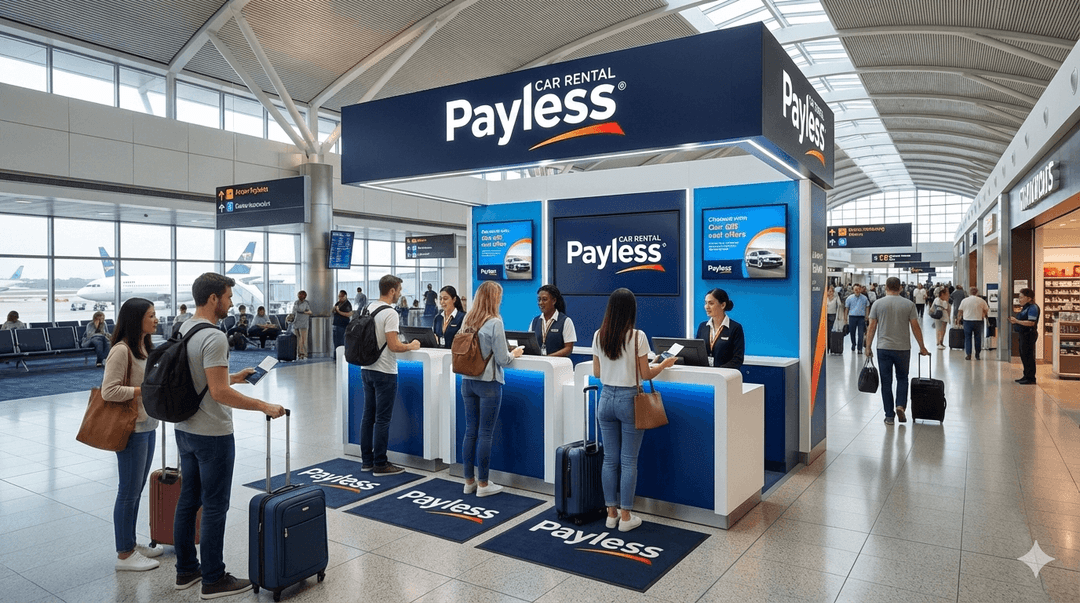
Summer 2026 will be even busier for travel from (and to) Slovakia than recent seasons. The number of passengers at airports is growing, new routes are being added, and charter flights are picking up speed again. For families and tourists, this has a very practical consequence: more arrivals and departures during peak times = greater pressure on car availability and rising rental prices, especially on the busiest days.
In this article, we will explain in simple terms:
- what exactly "charter" means and why it is making a comeback,
- what numbers we are seeing today in Slovakia and Europe,
- how demand from flights is spilling over into car rental prices,
- and most importantly: what to do to avoid overpaying in the summer of 2026 (specific tips, comparisons of solutions, and model scenarios).
What are charter flights (and how do they differ from regular flights)?
Charter flights in simple terms
A charter flight is a flight typically booked by a travel agency or tour operator (or possibly a large group) that "charters" the capacity of an aircraft for a specific route and dates.
The most common types are:
- summer seaside destinations (Saturday/Sunday return flights),
- winter exotic destinations,
- seasonal destinations where capacity is only worthwhile for a few months.
Charter vs. scheduled flight
- Scheduled flight: tickets are sold continuously, the flight schedule is more stable.
- Charter: flights are operated in "blocks" according to the season and hotel capacity; peaks are more pronounced (typically the same days of the week).
For car rental companies, the key factor is that charters create sudden waves of demand. When several flights with holidaymakers arrive within 2-3 hours, most of the available cars in the vicinity of the airport are temporarily taken.
Why charters are making a comeback: three growth drivers
1) European tourism is back at its peak
Europe and the EU are reporting record numbers of overnight stays and strong seasonality – and this is precisely the environment in which charters make economic sense.
2) Airports in Slovakia are increasing their range of destinations
Public airport data shows that the charter segment is also strengthening (alongside low-cost and regular routes). In addition, charters often see the return of destinations that had been "on hiatus."
3) Customers prefer packages and convenience
Families and tourists know that with a "flight + hotel" package, there is less risk of their logistics falling apart. And once they have their flight and accommodation sorted, they naturally tackle the last piece of the puzzle: mobility at their destination – i.e., a car.
Hard numbers: what the data suggests for summer 2026
(Status as of January 14, 2026 – selected publicly available data.)
Slovakia: air transport and charters
| Airport | Latest published figures | Why this is important for rental prices |
| Bratislava (BTS) | 2025: 2,438,215 passengers (≈ +25% vs. 2024: 1,948,008). July 2025: 358,898 passengers; record day on July 22: 12,971. Summer season 2025: 39 regular routes + 43 charter flights (typically Egypt, Bulgaria, Greece, Turkey, Tunisia, Spain). The airport has announced its ambition to exceed 4 million passengers in 2026. | More vacationers on the same days/hours → sudden demand and higher probability of "family" categories being sold out. |
| Košice (KSC) | Summer charter season: 17 seaside destinations (up 4 year-on-year), including the return of Hurghada. The airport also announced a record 800,000 passengers in 2025. | Cycles and seasonal waves of demand (Saturdays/Sundays) → local peaks in prices and availability. |
Signal for summer 2026: growth in low-cost carrier capacity
- Ryanair has announced a record summer 2026 flight schedule for Bratislava: 15 routes, approximately 1.2 million seats, 3 based aircraft, and a target of 2 million passengers in 2026.
Tourism in Slovakia: demand returns to record levels
- In the first 9 months of 2025, 4.9 million guests stayed in Slovakia (≈ +7% year-on-year) and overnight stays reached 12.7 million (≈ +6% year-on-year). Compared to the record year of 2019, only ≈ 1.6% of guests were missing.
European context: when Europe travels, land mobility also becomes more expensive
- In 2024, the EU recorded more than 3 billion overnight stays in accommodation facilities (the best year in history, +2.2% vs. 2023). Overnight stays by foreign guests increased (+4.9%), while domestic overnight stays remained roughly stable.
How charter flights drive up rental prices: 6 mechanisms in practice
1) Peaks at specific times (not "all day")
Charters often arrive and depart at similar times (especially on weekends). This creates a situation where:
- many people want a car at the same time within a 1-3 hour window,
- the branch has a limited number of vehicles and staff available,
- vehicles cannot be turned around quickly enough (cleaning, inspection, refueling, administration).
The result: prices rise faster than with evenly distributed demand.
2) Families and tourists often want a "specific" car
When going on vacation, few people say "anything will do."
The most common requests in the summer:
- automatic transmission
- station wagon/SUV
- 7-9 seats
- large trunk
- child seat, second driver.
The more specific the request, the smaller the offer – and the higher the price pressure.
3) Airport = higher costs + higher demand
Airport branches usually have:
- higher operating costs,
- a higher proportion of last-minute customers,
- greater pressure to process requests quickly.
Therefore, in practice, you will often find that the same car may have a different price at the airport than in the city (or an airport fee is added to the price).
4) Dynamic pricing
Modern car rental companies use dynamic pricing – the price can change in real time depending on demand, fleet occupancy, and season.
The most important rules that customers notice:
- prices rise during peak periods (July–August, holidays, long weekends)
- prices rise even faster when fleet occupancy is higher
- longer rentals often reduce the average price per day.
5) Last-minute premium
If a family starts to deal with their car "after arrival", they often pay:
- a higher daily rate,
- less favorable conditions (smaller selection, higher deposit depending on the category),
- additional fees (e.g. weekend, outside opening hours).
6) Invisible "logistics costs"
The fact that it is summer does not only increase demand. It also increases the cost of operation:
- faster wear and tear (kilometers on vacation),
- higher damage rate during peak hours,
- more expensive service windows (cars must be prepared quickly).
Model scenario: why Saturdays may be more expensive in summer 2026
This is a simplified model to understand the mechanism (not a “guaranteed prediction”).
Imagine that during one round trip day (e.g. Saturday) several charters with vacationers arrive at the airport and low-cost airlines arrive at the same time.
- If only 10% of the arrivals need a car (families, groups, trips),
- and a large part wants a car at the same time,
- the branch may have a “peak” demand of tens to hundreds of rentals in a short window.
What will the market do?
- cars that were still “cheap” 2 weeks ago will be sold out,
- specific or higher categories will remain,
- the price per day will increase (dynamic pricing),
- minimum rental periods may also appear (e.g. 3–5 days).
Comparison of solutions: how to save on rental in summer 2026
Below is a practical comparison of options that families and tourists actually use.
1) Book earlier vs. later
Earlier (recommended):
- better selection of categories (automatic, 7-9 seats),
- lower probability of "last-minute surcharges",
- you can plan extras (seat, second driver) without stress.
Later (risk):
- higher prices during peak times,
- less choice,
- higher chance of ending up with a category that doesn't suit you.
2) Weekend vs. week (why a week can be cheaper)
With dynamic pricing, it is often true that a longer rental reduces the average price per day.
Practically:
If you have a 6–8 day vacation, it is often better to take a car for the whole time than to combine taxi + short 1–2 day rentals.
3) Airport vs. city (and fees to note)
In summer, the difference “airport vs. city” is often the biggest.
For airport pick-up, the following may appear (example of PAYLESS conditions):
- airport fee: +20% of the rental price,
- weekend fee: €15 (if pick-up or return takes place during the weekend during opening hours),
- outside opening hours services: typically €50 (07:00–19:00 outside weekends) or €120 (19:00–07:00, weekends and holidays),
- child seat / accessories: e.g. €12 / day (or discount for rentals longer than 7 days).
Tip: If logistics allow, compare:
- pick-up at the airport vs. short drive to the city and pick-up there,
- and especially compare the total cost, not just the daily rate.
4) One larger car vs. two smaller ones
A common dilemma for families and groups is:
- 7-9 seats vs. 2 smaller cars.
Typically:
- 2 cars = double the deposits, double the insurance options, double the parking,
- 1 larger car = higher daily rate, but easier logistics.
5) Add-ons: where to save without risk
Add-ons can make up a significant portion of the price.
Consider:
- a second driver only if you really need one (often a fee is charged – e.g. €12/day or €50 for rentals longer than 7 days),
- a child seat (it is sometimes worth bringing your own, but only if it is logistically safe),
- the pick-up and return time (outside opening hours tend to be significantly more expensive).
Practical checklist for families (summer 2026)
• ✅ Book at least 3-6 weeks in advance (for 7-9 places, it's safe to book earlier).
• ✅ If you're flying on a tour, expect Saturdays to be the most expensive and most sold out.
• ✅ Check whether there is an airport fee and what the weekend policy is.
• ✅ Choose a car based on the actual luggage (stroller, seats, suitcases) - not the "number of seats".
• ✅ Make 2 route options: with a car vs. without a car. On trips, the car is often returned.
Trends for Summer 2026: What to Expect in Prices
1) Higher Price Volatility
Prices will “jump” more based on occupancy than they used to. If you track prices on different dates, the differences can be significant.
2) High Pressure on Large Cars
7-9 Seater Vehicles, Automatics, and Family SUVs will be the most susceptible to sellouts.
3) Greater Importance of “Time Strategy”
The pick-up and drop-off times will be more important than just “how many days.” During peak times, it can make a difference whether you pick up your car on a Friday night or a Saturday morning.
Investment perspective: why prices increase in peak periods also “from the other side”
If we look at the summer of 2026 through the eyes of a car rental company, prices are not just a reaction to demand. They are also costs and risks that increase in the summer.
Where does the pressure on costs arise (and why is it visible in the price lists)
- Limited fleet: cars cannot be “produced” overnight. If demand increases through new routes and charters, the fastest reaction is price.
- Service windows and wear: holiday trips and short turns increase service demands (tires, brakes, interior).
- Claims rate in peak periods: more rentals in a short time = higher risk of claims (and at the same time pressure from insurance companies on conditions and deductibles).
- Airport operations: airport branches need to handle large waves of arrivals, which means personnel costs and logistics of transfers.
How market players are reacting
- Yield management: the aim is to keep cars available for the most important dates and categories, but at the same time not to let the fleet sell out “too cheaply”.
- Seasonal replenishment of the fleet: often through short-term/monthly rentals from leasing partners or internal transfers between branches.
- Packages and add-ons: a transparent price breakdown (base rate + add-ons) allows you to offer a good price for planning clients while covering peak costs.
The conclusion for the customer is simple: in the summer of 2026, it will be even more important to plan, compare pick-up locations and have your reservation confirmed before “turnout” days sell out.
Frequently Asked Questions (FAQ) (FAQ)
1) Why might rentals be more expensive in summer 2026 than in 2025?
Mainly due to a combination of higher demand (more flights and tourists), seasonality (July–August) and limited supply of cars during peak times.
2) How far in advance should you book a car for your summer vacation?
For a regular car, often 3–6 weeks in advance; for automatic cars and 7–9 seats, ideally 6–10 weeks (or immediately after purchasing your flight tickets).
3) Is it cheaper to pick up a car at the airport or in the city?
It depends on the conditions and fees. Airports often have higher demand and specific fees. Always compare the total price (including extras).
4) Why does the price change from day to day (or hour to hour)?
This is the effect of dynamic pricing: the price responds to demand, fleet occupancy and the season.
5) What is the biggest mistake families make when renting a car in the summer?
They book the car too late and then take “what is left” – often more expensive and less suitable (small trunk, no automatic, unavailable extras).
6) Can I save without risking quality?
Yes: early booking, more flexible pick-up time, longer rental (lower average rate) and a sensible choice of extras.
TL;DR (summary)
- Charter flights create demand peaks that push rental prices up (especially on busy days).
- Slovak airports communicate an increase in destination supply and high seasonal volumes, which means higher pressure on car availability in the summer of 2026.
- The airport tends to be more expensive than the city (demand + traffic + possible fees).
- Dynamic pricing makes prices more volatile - it pays to book early during peak times.
- The best strategy for families: book early, choose the right category, and don't pay unnecessary extras.
Keywords and entities
Main keywords
- charter flights
- tourism
- rental prices
Related keywords and phrases
- charter flights Bratislava
- summer season 2026
- car rental at the airport
- dynamic pricing car rental
- family car for vacation
- 7–9 seater car rental
- airport fees
- last-minute car rental
Entities (subjects, places, organizations)
- M. R. Štefánika Airport Bratislava (BTS)
- Košice Airport (KSC)
- Ryanair, Wizz Air, Smartwings
- Eurostat, UN Tourism, ACI EUROPE, IATA
- Bratislava, Košice
- Antalya, Hurghada, Heraklion, Rhodes, Burgas (examples of charter destinations)
Conclusion
The return and growth of charter flights is great news for travel – more options, more destinations, more dates. But from a budget perspective, there’s a simple rule: the more people traveling at the same time, the more expensive ground transportation becomes.
If you’re planning a vacation in the summer of 2026, make car rental as much a priority as airfare and hotel.
