Ako geopolitika ovplyvňuje ceny a dostupnosť fleet vozidiel v EÚ
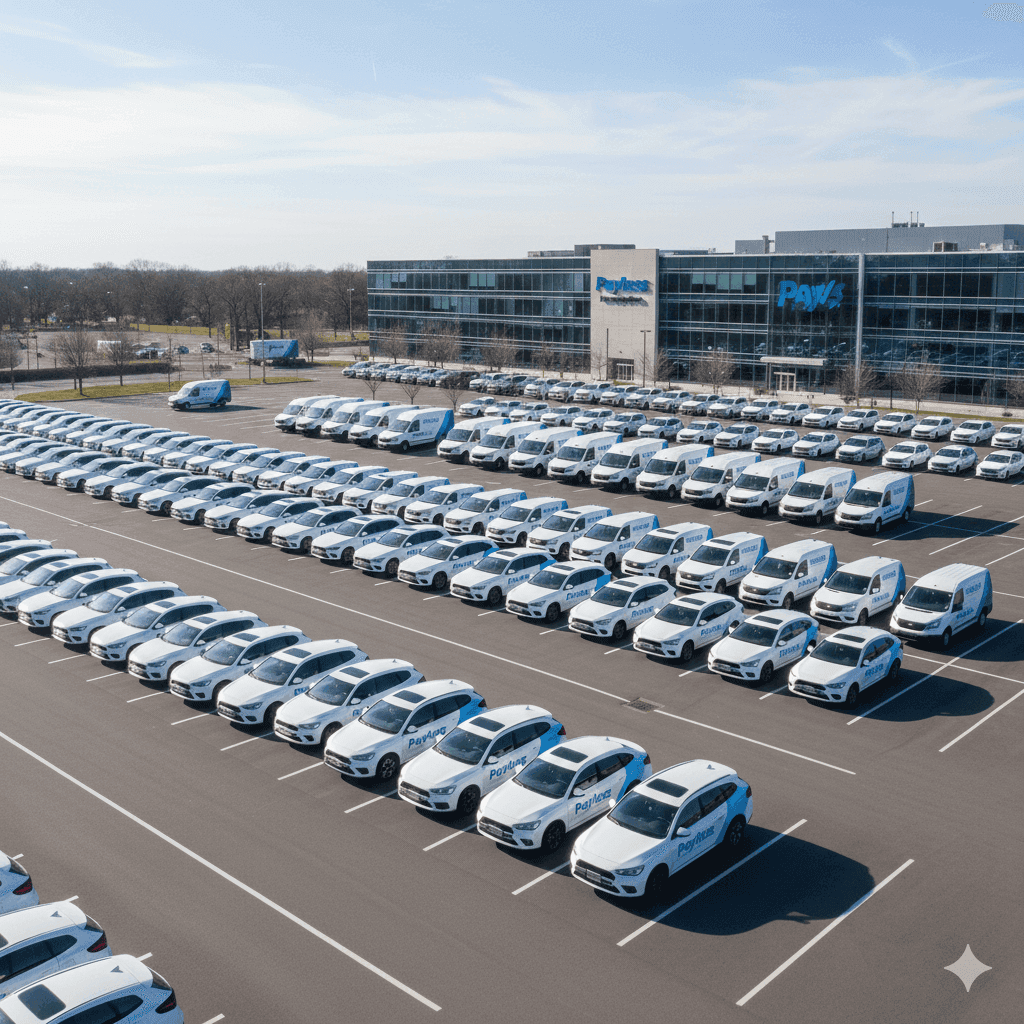
Geopolitics today significantly affects how much a company's fleet costs and how quickly you can realistically get vehicles. Conflicts, sanctions, trade disputes, energy security and control over critical raw materials form an "invisible layer" over automakers' supply chains. The result is fluctuations in the prices of new and used vehicles, changes in model availability and higher uncertainty in CAPEX/OPEX planning. In the article you will find an overview of the main influences, specific data and practical recommendations on how to manage your fleet in a way that is more resilient to shocks.
What does “geopolitics” mean in the context of fleet vehicles
Geopolitics is not just “intelligence”. For fleet purchasing, it means a set of factors that can change price, lead time, risk and contractual terms.
Typical channels of influence (key phrases)
- Sanctions and trade restrictions (components, technologies, raw materials)
- Energy security and energy prices (production, logistics, operation)
- Maritime transport and insurance risks (shipping, transhipments, delays)
- Raw materials policy (lithium, nickel, cobalt, graphite, rare earths)
- EU industrial and climate regulation (emission targets, tariffs, production localization)
5 Geopolitical Factors Driving Prices and Availability (2022–2025)
1) Ukraine Conflict and Energy Shocks
The war accelerated changes in the EU energy sector: diversification of gas supplies, pressure on renewables, savings and increased sensitivity of industry to energy prices.
Impact on fleets:
- Increasing production costs (energy in metallurgy, chemical industry, subcontracting)
- Volatility of logistics costs (fuel, transport, insurance premiums)
- Increasing total cost of ownership (TCO) for vehicles with high mileage
What to watch:
- Electricity/gas prices for industry and carriers
- Carrier margins, capacity availability
- Changes in tax and regulatory frameworks (company cars, emissions)
2) Disruptions to maritime transport (Red Sea effect)
When safety on maritime routes deteriorates, routes change (detours), transport time and price increase, insurance costs increase.
Impact on fleets:
- more expensive and slower deliveries of parts and finished vehicles (especially from Asia)
- higher pressure on “just-in-time” models and inventory
Practical effect: Even if the vehicle is “made”, it may be sitting on the route or in the port – and the company has nothing to fill projects with.
3) Technological rivalry (chips and electronics)
A car today is not “just mechanics”. Modern vehicles (especially EVs and higher trims) are extremely dependent on semiconductors, sensors and power electronics.
Impact on fleets:
- chip supply outages are quickly reflected in production plans
- car companies prioritize higher margin models → fleet segment may be “pushed aside”
Trend for 2025: Manufacturers and analysts warn that new tensions in the semiconductor chain may emerge again (e.g. conflict of demand from AI/data centers vs. automotive).
4) EU trade policy: tariffs and anti-subsidy measures
The EU tightened its approach to imports of some products, including parts of the battery electric vehicle (BEV) segment from China in 2024–2025.
Impact on fleets:
- change in final prices of imported models
- pressure to reallocate suppliers and localize production
- possible countermeasures (risk for export industries)
Management lesson: When purchasing fleets, it is important to have a “plan B” for brands/models that are more dependent on one region.
5) Critical raw materials for batteries and magnets (minerals)
The transition to electrification increases the importance of raw material security. Even with decreases in the prices of some minerals, the risk of concentration of mining and processing in a few countries remains.
Impact on fleets:
- Fluctuations in battery component prices and availability (especially with rapid demand changes)
- Risk of EV economics changing (price, lead times, residual values)
How exactly does geopolitics increase (or decrease) the cost of a fleet
1) Cost of production and subcontracting
- energy (production of steel, aluminum, plastics)
- logistics (transportation of parts across multiple borders)
- compliance (certifications, sanction regimes, customs procedures)
2) Cost of capital (financing)
With high interest rates and stricter financing conditions, the cost of capital increases.
Fleet effect:
- more expensive financing of purchase (CAPEX)
- higher monthly payments on leasing
- higher discounting of residual values (residual risk)
3) Residual values and used vehicles
When new cars are unavailable or more expensive, the demand for used cars increases and residual values increase (or decrease).
For the CFO: residual value is the “hidden” profit/loss in fleet policy.
How geopolitics affects availability (lead times, equipment, model mixes)
A short list of typical symptoms
- Longer delivery times for selected models or equipment
- Outages of some equipment elements (infotainment, assistants, camera systems)
- Changes in automaker priorities (retail vs. fleet, more expensive models than cheaper ones)
- Regional differences in allocations (where there is demand and where there is production capacity)
Why fleet is sometimes a “second choice”
- Fleet orders are often large, but margin-sensitive
- With limited production, the automaker will prioritize retail or higher-margin configurations
Comparing Business Solutions: Purchase vs. Operating Lease vs. Flexible Lease
The goal is not a “one size fits all” solution, but a mix that reduces risk.
1) Purchase (fleet ownership)
Pros:
- full control over the asset
- potential for higher residual value if the market grows
Cons:
- high CAPEX, higher pressure on cash flow
- higher residual risk in case of technological changes (e.g. rapid shift to EVs)
- delivery time risk (projects may be delayed)
2) Operational leasing (full-service)
Pros:
- predictable OPEX, service and usually management in one
- transfer of part of the risks (service, often also residual risk) to the provider
Cons:
- less flexibility in case of changes in the number of vehicles and mileage
- in case of rapid market changes, the contract may be “rigid”
3) Flexible long-term lease / medium-term solutions (3–12 months)
Pros:
- rapid deployment of vehicles
- suitable for bridging deliveries, projects, onboarding, seasonal peaks
Cons:
- May be more expensive than classic leasing in long-term use
Recommended “anti-crisis” mix for top management
- 70–85% of fleet in stable mode (leasing or ownership)
- 15–30% of fleet in flexible mode (rentals, short-term contracts, pool)
How AVIS can help reduce geopolitical risk in the fleet
AVIS in Slovakia covers multiple mobility scenarios – from short-term rentals to longer-term solutions.
Practical use cases
- Bridging the delivery of new cars (temporary vehicles to the fleet)
- Quick project start-up (temporary reinforcements for the team, construction, logistics)
- Seasonal peaks (e.g. retail, service interventions, events)
- Accident / service compensation (minimization of downtime)
Relevant services (entities)
- AVIS Business (corporate mobility)
- AVIS Lease (operational leasing)
- AVIS MaxiRent (long-term and flexible rental)
- AVIS Van Rental (commercial vehicle rental)
10 recommendations for CFO/COO: how to manage a fleet in times of uncertainty
Strategic recommendations (bullet points)
- Set up fleet policy as a portfolio: diversify brands, drives, contract length.
- Implement scenario planning (best/base/worst) for deliveries, prices and availability.
- Create a pool of vehicles for internal transfers and short-term needs.
- Include mileage packages, exchange flexibility and extension options in contracts.
- Monitor TCO by segment (M1/N1, ICE/HEV/BEV) and update quarterly.
- Consider residual value risk in rapid technological change.
- Ensure availability of commercial vehicles (N1/N2) in advance – they are sensitive to the investment cycle.
- Verify supplier risks: origin of components, dependence on Asia, alternatives.
- Invest in data: telematics, collisions, utilization, claims.
- Break down silos: procurement, finance, operations, and HR should have a common dashboard.
Trends for 2026–2027 (likely direction)
What is most likely today
- Continued electrification and pressure on local supply chains
- Higher protection of strategic sectors (tariffs, subsidies, localization)
- More frequent “local” outages (chips, batteries, logistics) instead of one global crisis
What can top management do now
- Increase the flexible component of the fleet
- Agree on SLAs for delivery times and replacement vehicles
- Prepare transition scenarios (ICE → HEV → BEV) according to the reality of operation
FAQ – Most frequently asked questions (People Also Ask)
1) Why do fleet vehicle prices change even without a change in the automaker's price list?
Because the final price is also made up of transportation, energy, component availability, financing and discount policies with limited production.
2) What is the biggest risk to car availability in 2026?
From the EU's perspective, it is a combination of semiconductors, battery materials and logistical constraints on global routes.
3) Is it more profitable to buy or rent in times of uncertainty?
It depends on the company's profile. In practice, a mix works: the core of the fleet is stable (leasing/ownership) and part is flexible (rental/pool).
4) How can management quickly verify whether the fleet is "resilient"?
Check the proportion of vehicles with flexible exchange, brand/supplier concentration, residual value risk and the ability to cover peaks within 48–72 hours.
5) How do tariffs on certain imports relate to fleet procurement?
Tariffs change the prices and sometimes the availability of specific models. Fleet strategy should consider alternative brands and powertrains.
Summary / TL;DR (3–5 points)
- Geopolitics affects the fleet through energy, logistics, chips, tariffs and raw materials.
- The biggest risk is the combination of availability (lead times) and TCO volatility.
- For top management, a mix of solutions works: stable core + flexible layer.
- Monitor the dashboard: registrations, production, shipping index, energy prices and critical minerals.
- AVIS can help especially with bridging supplies and quickly increasing fleet capacity.
Conclusion
If your fleet is critical to your business performance, geopolitics can no longer be considered “external noise”. It is a variable that directly impacts budgets, vehicle availability and business continuity. The best answer is expert planning, a portfolio approach and a flexible mobility layer that covers outages and seasonal peaks.
Want to set up a more resilient fleet for 2026? Contact AVIS and we will discuss the right mix: short-term rentals, long-term rentals and operational leasing according to your business.
Sources
- ACEA – EU New Car Registrations (2025 YTD) and Powertrain Structure
- European Commission – REPowerEU and Energy Security Measures
- European Commission (Trade) – Anti-Subsidy Measures and Tariffs on Selected BEV Imports
- Eurostat – EU Fleet, Electrification and Transport Statistics
- IEA – Global Critical Minerals Outlook 2025
- Drewry / Analytical Assessments – Impact of Maritime Disruption on Routes to Europe
- European Court of Auditors – Report on EU Microprocessor Strategy
- S&P Global Mobility – Semiconductor and Automotive Supply Chain Risk Analysis
- AVIS (avis.sk) – Corporate Mobility Solutions
- AVIS Lease (avislease.sk) – Operational Leasing
- AVIS MaxiRent (avismaxirent.sk) – Long-Term and Flexible Leasing
- AVIS Van Rental (avisvan.sk) – Commercial Vehicle Leasing
