Choosing a car for weekend travel: city break without compromise
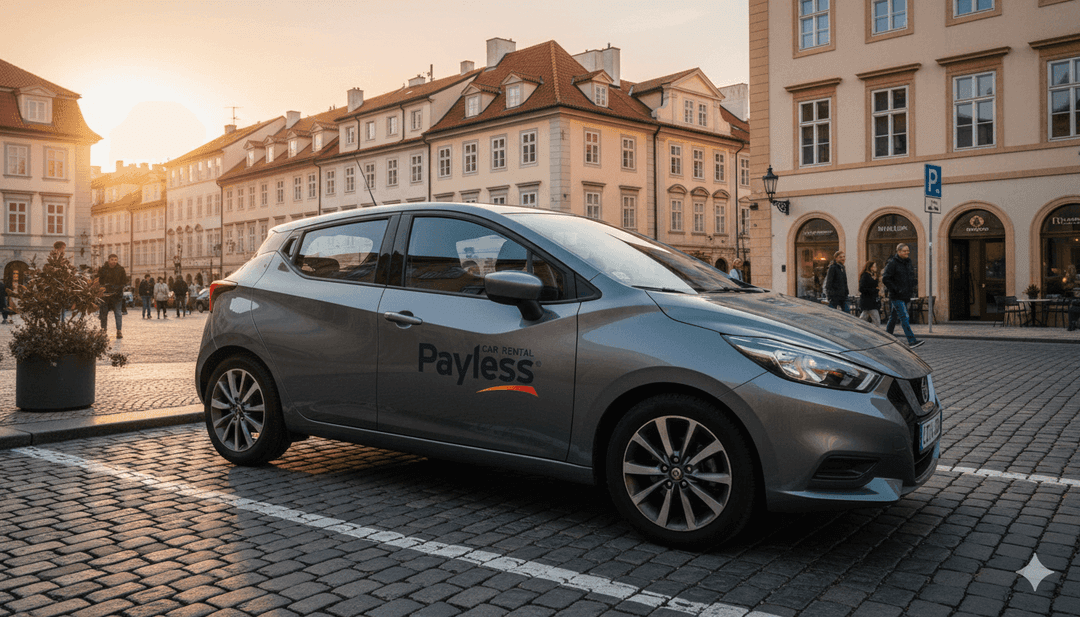
A weekend city break is a quick reset - two to three days, a new city, a good meal, a concert or a trip to see friends. To make it work, the car needs to fit your route, driving style and budget. In this article, you'll find a practical guide on how to choose the ideal car for a short rental, a comparison of solutions (rental vs. own car vs. alternatives), specific numbers and travel trends (Eurostat), and tips that are most often forgotten when renting.
What is a "city break" and why the demand for short-term rentals is growing
A city break is a short stay (usually 1-3 nights) in or around a city - typically over a weekend. It is especially popular with young people because:
- it can be managed on a budget,
- there is no need to deal with a week's holiday,
- can be combined with work/school (Friday afternoon - Sunday evening),
- offers flexibility (trip, concert, sport, visit).
Data and trend (EU): More than half of tourist trips by Europeans are short stays of up to 3 nights (Eurostat, 2024). In practice, this means that 'weekend escapes' make up a significant part of travel - and with this comes a growing interest in flexible mobility, where you only rent a car when you actually need it.
How to choose a car for a weekend trip: 7 questions that decide
1) How many people are going and how much luggage are you taking?
The most common mistake on a city break: underestimating the luggage.
- 1-2 people + small suitcase/backpack: mini/economy or compact car.
- 2-3 people + 2 suitcases: a compact (hatchback/combi) is a safe choice.
- 4 people + suitcases: station wagon or smaller SUV.
- 5 people / bunch: larger SUV or 7-9 seater vehicle (if you want to go together in one car).
Tip: If you're planning shopping, sales, or a trip with gear (skis, snowboard, stroller), count on both trunk volume and seat folding.
2) Are you primarily going into town or also out of town?
- City (parking, narrow streets): smaller car = less stress, cheaper parking, easier to maneuver.
- Highway + longer route: more stable and quieter car (compact, sedan, SUV) increases comfort.
- Mountains / winter: higher chassis, winter equipment and possibly 4×4 (depending on destination).
3) How many kilometres do you realistically drive?
For a short rental, a mileage limit and a "mental budget" for fuel is important.
- For a weekend city break around 200-600 km (there and back) is often enough.
- Some weekend packages on the market work with a specific limit (e.g. fixed mileage weekend packages).
Handy hint: Make a mini itinerary (there, city, trip out of town, back) and add 15-20% margin.
4) What type of fuel makes sense in 2026?
- Gasoline: ideal for city driving and shorter routes.
- Diesel: makes sense especially for higher mileage (more frequent motorways), but you have to take into account that some cities in the EU have stricter rules for older diesels.
- Hybrid: excellent compromise for city break (city + motorway), often lower consumption in the city.
- Electric car: great in the city and for shorter routes; plan to charge before you go (especially in winter temperatures and on the motorway). There is a gradual expansion of infrastructure in the EU (AFIR - European Commission).
Specific data (SR): the Slovak Statistical Office publishes weekly average fuel prices; in the first weeks of 2025, current prices were around €1.56-1.61 per litre (95 petrol) and €1.51-1.57 per litre (diesel). Take this as an indicative benchmark for calculating costs.
5) Parking and zones in cities: what may surprise you
When on a city break abroad, practicality, not size, is often the deciding factor.
- Small car = easier parking,
- automatic car = convenience in the city,
- navigation/CarPlay/Android Auto = faster transfers,
- some cities have eco zones or requirements (e.g. eco plaques).
Note: Some rental services list fees associated with an "eco plaque" - it's worth checking in advance to see if you need one.
6) Safety, comfort and technology (for the young = must-have)
For a weekend away, you want to 'hop in and go', not deal with compromises.
Make sure the vehicle has:
- Adaptive cruise control (highway),
- automatic lights/wipers,
- parking sensors/camera,
- USB-C charging,
- good winter season footwear.
7) Budget: don't just compare price per day
For a short rental, also look at:
- Deposit and payment method,
- insurance/participation,
- mileage limit,
- fees (younger driver, additional driver, winter equipment, eco plaque),
- pick-up/return outside opening hours.
The best types of car for a city break: comparison by scenario
A) Mini / Economy (urban minimalism)
For whom: couple, solo traveler, low-cost trip.
Pluses:
- Lowest fuel consumption and often rental price,
- easy parking,
- ideal for cities.
Minuses:
- Smaller boot,
- less comfort on the motorway.
B) Compact (the most versatile choice)
Who for: 2-3 people, suitcases, city + road trip combination.
Pluses:
- More comfortable on the highway,
- still good parking,
- often the best price/performance ratio.
Minuses:
- with 4 people with suitcases it can be tight.
C) Estate (when you take a lot of stuff)
Who for: 3-4 people, lots of luggage, sports equipment.
Pros:
- Large suitcase,
- comfort on a longer route.
Minuses:
- Parking downtown can be more challenging.
D) SUV/Crossover (comfort + height)
For whom: 3-5 people, winter destinations, city + region combination.
Pluses:
- Comfort, better views,
- often better equipment.
Minuses:
- Higher consumption (especially in the city),
- higher parking requirements.
E) Hybrid / EV (modern city break)
For whom: tech-friendly travelers who want a quiet ride and lower operating costs.
Pluses:
- Lower consumption in the city (hybrid),
- Quiet driving,
- suitable for cities.
Minuses:
- Charging needs to be planned for EVs,
- range is more sensitive to winter and highway.
F) 7-9 seater vehicle (you go as a group)
Who for: a bunch of friends, festival, mountains, family with friends.
Pluses:
- One driver, one route, shared logistics,
- often cheaper per person.
Minuses:
- Parking in the centre,
- higher consumption.
Comparing solutions: rent vs. own car vs. alternatives
Renting (short lease)
When it makes the most sense:
- Traveling 1-2 times a month or only seasonally,
- You don't want fixed costs (insurance, service, parking),
- you want to choose the type of car according to the destination (city vs. mountains).
Pluses: flexibility, newer cars, less hassle.
Own car
When it makes sense:
- You drive often and regularly,
- You have stable parking,
- you have budget security for servicing and insurance.
Cons: fixed costs even when the car is stationary.
Carsharing / public transport / train
When it makes sense:
- You go to a city with good connections and parking is an issue,
- you plan to move mainly in the centre.
Note: For a "mix" (city + neighborhood), renting often wins.
Practical advice for short lets (and what young people forget)
Documents and payment
- OP/passport + driving licence.
- Payment card (deposit is common).
Driver's age and fees
For some rentals, there may be a minimum age or a "younger driver" fee.
Example of fees (PAYLESS - indicative according to the service price list):
- Young driver fee: 12 € / day (excluding VAT), quoted at a minimum age of 25 years,
- additional driver: 15 € / day (excluding VAT),
- winter maintenance: 5 € / hire (excluding VAT),
- winter chains: 20 € / hire (excluding VAT),
- eco plaque: may be charged (depending on destination and length of hire).
(Note: Conditions may vary by branch, destination, season and vehicle type - always check the current price list and conditions when booking.)
Insurance and deductibles
- Find out what the basic insurance covers and what the excess is.
- For city breaks, it's handy to have a clear 'what happens if...' policy (glass damage, tyre damage, undercarriage damage).
Taking over the car (a 2-minute routine that saves stress)
- Take a picture of the car (exterior + interior + mileage + fuel status).
- Check equipment (warning triangle, reflective vest, first aid kit - depending on country).
Fuel: full-full is the fairest
- Always ask about the fuel policy.
Trends influencing the choice of a city break car in 2026
1) Short breaks dominate
Eurostat shows that short trips (up to 3 nights) account for a significant share of travel in the EU. For car rental companies, this means an increase in demand for flexible products (weekend packages, short rentals, city cars).
2) Fleets are rejuvenating more slowly, but customers want "new"
The average age of cars in the EU is over 12 years (ACEA). Therefore, renting is a way for many to drive a newer car without dealing with a large purchase investment.
3) Emissions and rules in cities
Transport is a big part of emissions - especially road transport (EEA). In cities, there are increasing measures that favor more efficient cars (hybrid/EV) or require certain standards.
4) Dynamic pricing
Rental prices change seasonally (demand, holidays, events, new airlines). To save, book early, watch for promotions and compare packages.
Mini calculator: how much does a city break cost by car?
Approximate formula
Fuel cost = (km / 100) × fuel consumption (l/100 km) × fuel price (€/l)
Example (indicative only):
- 420 km route,
- consumption 6.0 l/100 km,
- fuel price 1,60 €/l
=> (420/100) × 6,0 × 1,60 ≈ 40,32 €
Tip: For 2-4 people, split the cost - often a car will work out cheaper than a combination of individual tickets + transfers in town.
Investment insight: when is renting more rational than a "second car"
Young people often face a dilemma: to buy a cheap car "on weekends" or rather to rent.
To own a car is a fixed cost, even if it costs
Typical fixed costs (simplified):
- PZP (and possibly breakdown cover),
- servicing + tyres,
- parking,
- depreciation (depreciation),
- unexpected repairs.
The lease works as a "pay-as-you-go"
- you pay when you use the car,
- you can choose the type you want (city car vs. SUV vs. 7-9 seater),
- for short stays, convenience and time are often the deciding factors.
How do you compare fairly:
- Calculate how many weekends you realistically travel (e.g. 8-12 per year),
- add in fixed costs when you own your own car,
- compare with the cost of renting + fuel.
Frequently Asked Questions (FAQ)
1) What is the best car for a city break for two?
Most often the compact or economy wins - good value for money, easy parking and plenty of space for the weekend.
2) Is an SUV worth it for a weekend in the city?
If it's primarily downtown, an SUV is often unnecessary (parking, consumption). Makes sense for city + neighborhood combinations or in winter.
3) What is a "short rental" and for how many days is it worth it?
A short rental is typically 1-7 days. It is most worthwhile when you only need the car for a specific purpose (weekend, transfer, trip).
4) Can I rent a car if I am under 25?
Usually yes, but there may be a charge for a younger driver or specific conditions may apply - always check the current rules when booking.
5) How do I save money on weekend car hire?
Book early, keep an eye on weekend packages/promotions, compare mileage limits and choose a car category based on your realistic needs.
TL;DR (summary)
- City break = 1-3 nights and accounts for a large proportion of travel in the EU (Eurostat).
- For the weekend, economy/compact wins most often - ideal compromise of price, comfort, parking.
- Choice is based on: number of people, luggage, type of route, parking, fuel, equipment.
- For a short rental, keep an eye on km limits, deposit, insurance and fees (younger driver, additional driver, winter equipment).
- From an investment standpoint, renting makes sense when you don't want the fixed costs of owning your own (especially a second) car.
Keywords and entities (used in text)
Main KW: city break, short let
Related KWs and entities: weekend travel, weekend rental, car rental, car rental, economy, compact, station wagon, SUV, hybrid, electric car, range, charging, city parking, deposit, insurance, deductible, dynamic pricing, eco plaque, winter chains, road transport, transport emissions, Eurostat, ACEA, EEA, AFIR, Statistical Office of the Slovak Republic, Payless.
Conclusion
If you want a stress-free city break, choose your car according to reality - not ego: how many of you are going, where you're going, how much mileage you'll get and where you'll park. With a short rental, you have the advantage of being able to choose exactly the category you need for that weekend.
CTA: Check out the current PAYLESS offer and book your car for the weekend online - quickly, easily and with the type of car that suits your city break.
Sources
- Eurostat: Tourism statistics - characteristics of tourism trips (data for 2024)
- ACEA: Average age of the EU vehicle fleet, by country (published 9/2024)
- European Environment Agency (EEA): Greenhouse gas emissions from transport in Europe (indicator, update 11/2025)
- European Commission (DG MOVE): Alternative Fuels Infrastructure Regulation (AFIR) - overview (valid from 13.4.2024)
- Statistical Office of the Slovak Republic (STATDAT): Average fuel prices in the Slovak Republic (weekly)
- PAYLESS: price list for services (junior driver, additional driver, winter equipment)
- PAYLESS: blog article on dynamic pricing
