Comparison of rental prices in major European cities
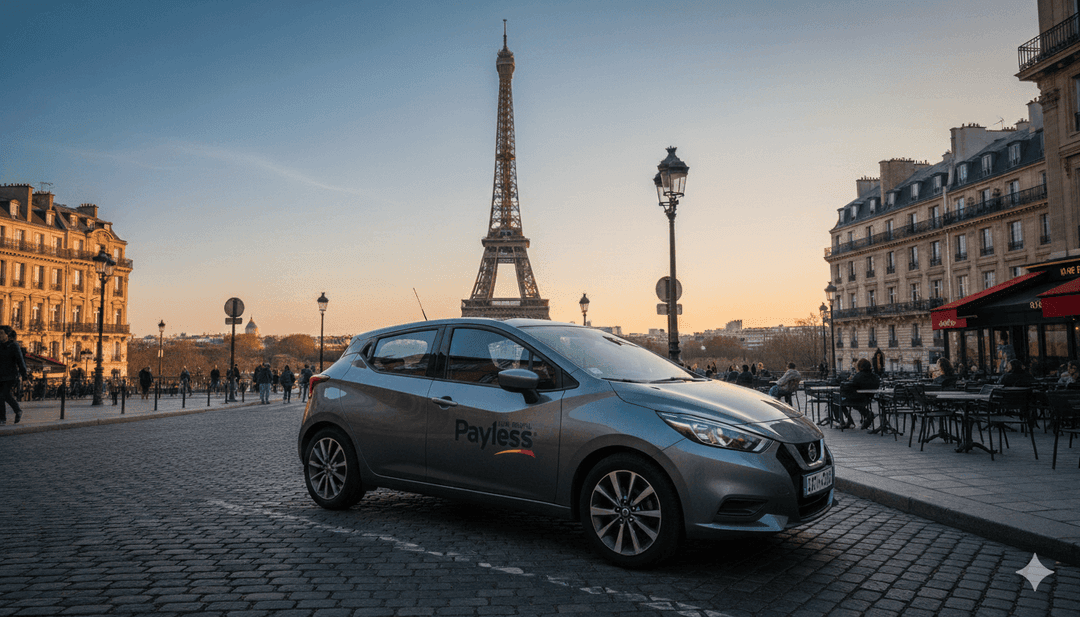
Are you planning a city break, a business trip or a roadtrip in Europe and want to be clear on your budget? Car rental prices vary widely between cities - and even more so by season, booking time, pick-up location and type of insurance. In this article, you'll find a handy comparison of rental prices in top European cities (with specific dates), an explanation of why prices fluctuate, and a checklist on how to choose a rental without unpleasant surprises.
Why "rental price comparison" is important
Renting a car is often the fastest way to get from the airport to your hotel, move out of the city centre or manage multiple stops in one weekend. But it's for short journeys (1-4 days) that the difference in price is most noticeable.
The most common reasons why prices vary
- Demand and season: summer, holidays, big events = rapidly rising prices.
- City and infrastructure: parking availability, restrictions in centres (LEZ/UZ), tolls, motorway charges.
- Pickup location: airport vs. downtown (different fees, different logistics, different competition).
- Car type: minis/economy tend to be cheapest, automatics and SUVs are growing by leaps and bounds.
- Insurance and deductibles: decides the "real" price, not just the price at first glance.
- Rental terms: deposit, fuel policy, driver fees, cross border driving.
Rental price comparison: average price per day in top cities
Below are indicative averages of daily rental prices (across offers and terms) from major comparison sites. Think of them as a benchmark - the final price depends on your dates, car class, insurance and availability.
How to read the table: this is the average "per day" price in a given destination; for 2-3 days, the price per day tends to be higher than for a week, and at peak times it can be 2-3x higher.
| City | Approximate average €/day | Note for practice |
|---|---|---|
| Paris | 61 € | Higher price pressure + more difficult parking (consider park & ride) |
| Amsterdam | 59 € | more expensive downtown, worth picking up outside the full downtown |
| Berlin | 43 € | good accessibility, but prices rise quickly in high season |
| Dublin | 43 € | beware of insurance conditions and higher deposits |
| London | 35 € | Avoid entering charging zones, consider the periphery |
| Vienna | 35 € | Ideal for weekend trips out of town, parking in zones |
| Barcelona | 25 € | good value for money outside the high season |
| Madrid | 23 € | often good prices when booking early |
| Milan | 22 € | Attention to ZTL zones in the centre (limited entry) |
| Lisbon | 21 € | prices can jump in summer, book early |
| Prague | 21 € | good prices, but they go up at peak times (holidays) |
| Rome | 13 € | cheap base, but watch fees/insurance (total price) |
Tip: If you're travelling for 3 days, also compare the option of returning the car in another city (one-way) - sometimes super convenient, but often makes the rental significantly more expensive.
What constitutes the rental price (and where "hidden" surcharges arise)
The price you see when you search may not be the final price. In practice, the most common mistake is that the traveller only compares "€/day" but not the package terms.
1) Insurance, deductible and deposit
- CDW/LDW (damage/theft insurance): often included but with a deductible.
- Reducing deductibles/coverage for glass, tires, undercarriage: changes the price - and peace of mind on the roads - significantly.
- Deposit on the card: the amount varies by car category and insurance package. It can be surprisingly high for some combinations.
Advice: Always check when comparing:
- the amount of the deductible in €,
- the amount of the deposit,
- exactly what the "full insurance" covers (it doesn't always cover glass/tyres/undercarriage).
2) Fuel policy
The most common options:
- Full-to-Full (recommended): you take over a full tank and return a full one.
- Prepaid: you pay for fuel up front; only convenient for longer routes.
3) Charges that can surprise
- Young driver (e.g. under 25): extra charge.
- Second driver: free in some places, charged elsewhere.
- Cross-border driving: common in Europe, but often requires consent or a surcharge.
- Toll, LEZ/ZTL zones: many cities have restrictions or charges.
- Fines: an administrative fee for processing a fine is standard.
When to book so you don't overpay
In big cities, a simple rule applies: the more popular the destination and the date, the earlier you book.
Practical rules for a city break
- Summer months and holidays: book ideally 4-8 weeks in advance.
- Off-season: 1-3 weeks is often enough.
- Last minute: works better for smaller cities or off-peak times - top destinations are a risk.
The money-saving trick
- Book a car with free cancellation if possible.
- Check prices again in 7-14 days.
- If it's cheaper, make a new booking and cancel the old one.
Comparison of solutions: renting vs. alternatives in the city
Renting a car is not always the cheapest. But it's often the best value combined with convenience - especially if:
- you're travelling as a couple or in a group,
- you have multiple stops outside the city centre,
- carrying luggage, sports equipment or work stuff,
- you are planning a trip outside the city (vineyards, mountains, beaches, castles).
A quick "break-even" look
Simplified:
- if you have 2-3 taxi transfers per day (airport ↔ downtown, dinner ↔ hotel, trip out of town), the cost can quickly approach the rental,
- for a group of 3-5 people, a car can be cost-effective even in more expensive cities.
Advice: When comparing, write down 3 items:
- rental + parking + fuel,
- taxi/ride-hailing,
- public transport + one-off transfers.
Trends 2026: why prices will be volatile in Europe
The rental market is sensitive to travel demand, season and fleet availability. At the same time, the number of trips and nights in accommodation is increasing in Europe, adding pressure on mobility.
What this means for travellers
- Strong summer and peak periods: for top destinations (especially by the sea and in tourist capitals), expect sharper price fluctuations.
- More demand in city centres: in some regions, there is a growing demand for off-airport rentals (e.g. when staying in the city centre).
- Electrification and automatic: more interest in automatic transmissions and hybrid/EV categories (where infrastructure is in place).
Handy pre-booking checklist (saves money and nerves)
- Choose the right pick-up location (airport vs. downtown).
- Compare the total price including insurance (not just €/day).
- Check deposit and accepted cards.
- Check fuel policy (ideally full-to-full).
- Check the rules for cross-border travel.
- Consider the size of the car according to parking in the city.
- Read the terms and conditions for fines and fees.
- Follow LEZ/ZTL rules when travelling to centres.
How to do it with PAYLESS (practically)
PAYLESS is the solution for travellers who want to easily compare rentals, book online and go. For city breaks, it is most often worthwhile:
- Economy/Compact: best value for money-parking.
- Estate/family cars: when you're travelling with 3-5 people or a lot of luggage.
- SUVs: if you're going to the mountains or off the tarmac (always subject to rental rules).
Budget tip: For weekend trips, a lower-end car + a better insurance package often works out better than a higher-end car without enough coverage.
Frequently Asked Questions (FAQ)
1) Is it cheaper to rent a car at the airport or downtown?
It often depends on the city. The airport may have more competition, downtown may have better access without a transfer. Always compare both options.
2) Why is the price so high in some cities?
High demand, restrictions in malls, seasonal peaks and vehicle availability. In touristic metropolises this is most evident.
3) Is "full insurance" worth it?
If you drive in busy cities or park on the street, reducing your risk is often worthwhile. The key is to know the deductible and what exactly the cover includes.
4) How can I save money without risking hidden charges?
Compare the total price (insurance, deposit, fuel policy) and choose quotes with clear terms and conditions and free cancellation.
5) How far in advance should I book my car for the summer?
In top destinations, we recommend 4-8 weeks in advance; earlier in peak periods.
TL;DR / Summary
- The differences between cities are large - the average can be from ~13€ to ~60+€ per day.
- It's not just about €/day: insurance, deductible, deposit and fuel policy all make a difference.
- Book earlier at top destinations and in high season; off-season you have more flexibility.
- A car is especially worthwhile for trips out of the centre and when travelling as a couple/group.
- PAYLESS is a handy option when you want to compare and book quickly.
Keywords and entities (used in the article)
Main KW: price comparison, rental price comparison
Related KW: car rental in Europe, car rental prices, city break, short rental, car rental, rental insurance, deposit, deductible, full-to-full, airport rental, city centre rental, one-way rental
Entity.
Conclusion
If you want to keep your budget under control on a city break, do a quick comparison of rental prices, check insurance conditions and book early - especially in popular European cities.
Want a specific offer for your dates? Book a car online with PAYLESS or contact us - we can help you choose the car class and set up your insurance.
