How dynamic pricing for car rentals works and how to use it to your advantage

Nowadays, when renting a car, the price is no longer set in stone in a PDF table. Modern car rental companies, including brands such as
PAYLESS, use dynamic pricing. This means that the rental price can change in real time depending on demand, season, fleet occupancy, and competitive offers.
In this article, we will explain what dynamic pricing means when renting a car, why it exists, how it benefits the customer, and how you can use it to pay as little as possible. We will also look at specific examples, trends in the EU, and practical tips for individuals who rent a car for a vacation, weekend, or business trip.
What is dynamic pricing when renting a car
Dynamic pricing is a method used by car rental companies to set rental prices by adjusting them to the current market situation. The aim is not to "deceive people," but rather to:
- make the best use of the vehicle fleet (so that cars are not left standing in the parking lot when demand is low),
- maintain fair prices compared to the competition,
- be able to offer more favorable prices during periods of lower demand,
- respond quickly to changes – such as new flight routes, holidays, or major events.
Unlike a static price list, where the price remains the same for months or years, with dynamic pricing, the amount you see when booking online changes based on dozens of variables.
What factors influence rental prices (dynamic pricing in practice)
1. Demand and seasonality
Demand has the strongest influence on price – that is, how many people want a car at a specific time and place.
- Summer holidays by the sea (July–August)
- Winter skiing (February–March)
- Holidays, long weekends, and public holidays
- Major events (concerts, festivals, sporting events, conferences)
When demand is high and most cars are already booked, prices can rise. Conversely, during the off-season, for example in November or January, you can find significantly lower rates if you time it right.
2. Reservation time – when you order the car
When you make your reservation is also important:
- Early booking often means lower prices and a wider selection of categories.
- Last-minute bookings can sometimes be cheap (if there are many cars available), but when demand is high, they tend to be significantly more expensive.
With dynamic pricing, the simple rule of "the sooner, the cheaper" no longer applies, but in general, long-term planning is still more worthwhile than last-minute risk-taking.
3. Length of rental
Price per day for:
- 1–2 days rental
- weekend rental (Friday–Monday)
- weekly rental
- long-term rental (e.g., 1–3 months)
can vary significantly. With dynamic pricing, car rental companies take into account that longer rentals are more stable and are often willing to offer a more favorable average price per day.
4. Vehicle type and class
Even within a single car rental company, pricing varies:
- economy class (small city cars),
- compact and family cars,
- SUVs and crossovers,
- vans and commercial vehicles,
- premium and luxury models.
Dynamic pricing tracks which categories are most in demand. Small cars may be more expensive than larger sedans during peak season if there is extreme demand for them and the fleet is almost sold out.
5. Location, branch, and airport
Prices vary depending on where you pick up the car:
- at the airport (where demand is higher, but operating costs are also higher),
- in the city center,
- at a regional branch.
Dynamic pricing can, for example, raise prices at the airport when several low-cost flights arrive, while prices at the city branch may remain lower.
6. Fleet occupancy and internal capacity
The car rental company monitors how many vehicles are:
- available,
- reserved,
- in service,
- being prepared for next rental.
If the fleet is almost fully booked on a given date, prices rise. If there are many cars available, the algorithm may offer more attractive rates to "get them moving."
7. Competition and market prices
Dynamic pricing typically also monitors:
- average prices of competitors in the area,
- price changes during the day,
- current promotions and discounts.
The goal is for the car rental company to be neither unnecessarily expensive nor suspiciously cheap, but rather to offer customers good value for money.
How dynamic pricing works "under the hood"
Algorithms, data, and artificial intelligence
Behind the simple number you see when booking a car online lies a relatively complex logic. Modern car rental companies use:
- fleet and reservation management software,
- price optimization algorithms, often using artificial intelligence,
- historical demand data (past seasons, holidays, events),
- current data (occupancy, new reservations, cancellations),
- external signals (airline tickets, major events, holiday calendar).
The system continuously recalculates the "ideal" price so that:
- maximized fleet utilization,
- maintained fair market prices,
- minimized situations where either everything is sold out too early or, conversely, many cars remain unused.
A simple example – the summer season
Imagine you want to rent a car for 7 days at a seaside resort during the peak summer holiday season.
- Six months in advance – the car rental company has many cars available, so the algorithm can offer more attractive prices to those who plan ahead.
- Two to three weeks before departure – most families have already booked their vacations, the fleet is filling up, and prices are gradually rising.
- Last minute on the day of arrival – there are only a few cars left, demand is still high – the system can raise the price to the maximum that the market is still willing to accept.
Conversely, during the off-season or periods of lower demand, dynamic prices can fall by tens of percent compared to peak prices.
Advantages of dynamic pricing for customers
Dynamic pricing is not just about "prices skyrocketing." With a well-designed system, it also brings several advantages for regular customers:
- Cheaper off-peak rates – if you travel outside peak periods, you can get very favorable prices.
- Motivation to plan ahead – booking early often works out better than waiting until the last minute.
- Wider choice of categories – when prices reflect actual demand, the fleet is used more efficiently and there are more options on the market.
- Online transparency – you can see the price in advance in the calculator and compare it with other dates or categories.
For brands such as PAYLESS, it is important that dynamic pricing remains understandable and fair – customers should know what they are paying for and what the terms and conditions are.
Advantages of dynamic pricing for car rental companies
From a car rental company's perspective, dynamic pricing has several key benefits:
- Better use of the fleet – cars are not left idle and generate income for most of the year.
- More stable income – higher prices during the season compensate for weaker periods.
- Flexibility in the face of fluctuations – quick response to unexpected changes (new airline route, major event, competitor failure).
- Targeted incentives – better prices for longer rentals, off-peak periods, or specific vehicle categories.
It is thanks to this pricing policy that the car rental company can afford to offer more attractive promotions and campaigns that would not be economically viable with a "fixed" price list.
Static price list vs. dynamic pricing – comparison
Static price list:
- Same price per day regardless of season,
- easy to understand but inefficient,
- risk of car rental being sold out during peak season and cars standing idle during off-season,
- limited scope for promotions and flexible offers.
Dynamic pricing:
- prices vary according to demand, season, occupancy, and other factors,
- allows for better distribution of demand over time,
- offers favorable off-peak prices and fair prices during peak season,
- supports flexible products – weekend rentals, short-term and long-term solutions.
It is important for ordinary customers to understand that dynamic pricing is not random. If you know how it works, you can plan better accordingly.
How to use dynamic pricing to your advantage (practical tips)
1. Play around with dates
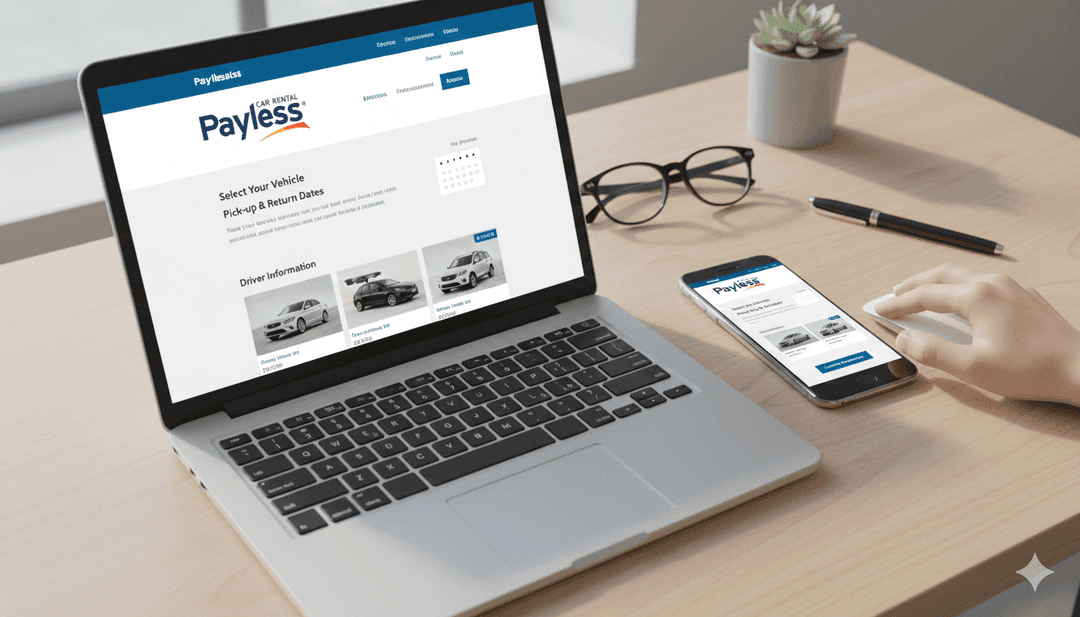
When booking online on websites such as paylesscar.sk, it is worth testing different combinations:
- move the start of the rental forward or backward by 1 day,
- shorten or extend the rental by one day,
- consider a weekend package (Friday–Monday) vs. individual days.
A small change in the date may reduce the total price by tens of euros.
2. Book earlier if it is peak season
If you know you are traveling:
- during summer holidays,
- at Christmas or Easter,
- during major festivals or sporting events,
Don't rely on last-minute deals. With dynamic pricing, available cars sell out quickly during peak periods and prices tend to rise.
3. Be flexible with the car category
If you don't need a specific model, but just a certain class (e.g., "economy car"), keep the following in mind:
- differences between the lowest and highest classes,
- promotional prices for specific categories (e.g., selected SUVs or vans),
- special offers for longer rentals.
Sometimes, a car that is one class larger may only be a few euros more expensive on a specific date, because the algorithm works with demand and occupancy.
4. Keep an eye on promotions and discount codes
With dynamic pricing, there is still room for classic marketing tools:
- discount codes,
- seasonal campaigns,
- special offers for loyal customers.
For brands such as PAYLESS, you can find these offers directly on the website, in the newsletter, or on social media.
5. Read the terms and conditions and fees
The rental price is not just about the basic daily rate. Also check:
- insurance conditions,
- any deposit and co-payment,
- fees for young drivers, additional drivers, vehicle delivery,
- mileage limits and surcharges for exceeding the limit.
Dynamické ceny môžu byť výhodné, ale len vtedy, ak máte prehľad o celkovej konečnej sume.
Trends in dynamic pricing for car rentals
Dynamic pricing is not a one-off trend, but a long-term development in mobility:
- Artificial intelligence (AI) – More and more car rental companies are using algorithms that learn from booking history and customer behavior.
- Connection to air and hotel transport – Rental prices are synchronized with flight schedules, hotel occupancy rates, and the prices of other services.
- Personalized offers – in the future, prices may also be adjusted based on customer loyalty status or purchase history.
- Connection to connected cars – vehicles send data on mileage, usage, and location, enabling even more accurate fleet planning.
For customers, this means more flexibility in practice, but also a greater need for planning and comparison.
How PAYLESS approaches pricing
PAYLESS is one of the brands that focuses on a favorable price-quality ratio. When pricing rentals, it uses:
- up-to-date data on demand and fleet occupancy,
- seasonal travel trends,
- transparently published price lists for additional fees,
- an online calculator where customers can see the price before confirming their reservation.
The goal is for the client to:
- knew in advance how much he would pay,
- understood what the price consisted of,
- could choose the date and category in order to save money.
Frequently asked questions (FAQ) – dynamic pricing for car rentals
1. Why does the rental price change from hour to hour ?
Because the system responds to new reservations, cancellations, changes in demand, and price adjustments by competitors. This is not an error, but a feature of dynamic pricing.
2. Is it better to book a car in advance or last minute ?
In most cases, it pays to book in advance for popular dates. Last minute can be advantageous during the off-season when there are many cars available, but during peak season you risk significantly higher prices or sold-out cars.
3. Can off-season rentals really be much cheaper ?
Yes. Dynamic pricing allows car rental companies to lower prices during periods of lower demand to encourage customers to travel outside of peak times.
4. Is dynamic pricing fair to customers ?
Yes, as long as it is transparent and understandable. Customers see the price in advance, can compare it with other dates or categories, and decide what suits them best.
5. Why does the airport branch have a different price than the city branch ?
Airport branches have different costs and typically higher demand. Dynamic pricing takes this into account, so prices at the airport may be higher than in the city center.
6. Can the car rental company change the price after I confirm my reservation ?
The price you saw and confirmed when you made your reservation is standard. Any further changes should be specified in the general terms and conditions, and the customer should be informed of them in advance.
TL;DR – key findings in brief
- Dynamic pricing means that the price of car rental varies according to demand, season, and fleet occupancy.
- This can be advantageous for customers who can plan ahead, travel outside peak times, and are flexible in terms of dates and vehicle category.
- A static price list is simple but ineffective – dynamic pricing allows car rental companies to make better use of their vehicles and offer attractive prices outside the high season.
- PAYLESS uses dynamic pricing with an emphasis on transparency, fair conditions, and good value for money.
- When booking, pay attention not only to the price per day, but also to insurance, deposit, and additional fees.
Keywords and entities
Main keywords:
- dynamické naceňovanie,
- dynamic pricing,
- prenájom auta,
- autopožičovňa,
- cena prenájmu auta,
- dopyt a sezónnosť,
- flotila vozidiel,
- online rezervácia.
Súvisiace entity a pojmy:
- PAYLESS,
- autopožičovňa Bratislava,
- letisková pobočka,
- víkendový prenájom,
- dlhodobý prenájom,
- poistenie a depozit,
- poplatok za mladého vodiča,
- sezónne akcie a zľavové kódy,
- umelá inteligencia v cenotvorbe,
- správa flotily.
Conclusion
Dynamic pricing is now standard for airline tickets, hotels, and car rentals. Once you understand how it works, it ceases to be a "mysterious algorithm" and can become an advantage for you. Traveling during off-peak times, booking early, and being flexible with dates and vehicle categories can save you tens to hundreds of euros.
If you are planning a trip, try playing around with the dates, rental length, and car type in the PAYLESS online calculator. You will see how the price changes and find the combination that best suits your budget.
👉 Reserve your vehicle online, check the current price, and use dynamic pricing to your advantage.
