Prenájom auta ako alternatíva k zdieľaným kolobežkám v mestách
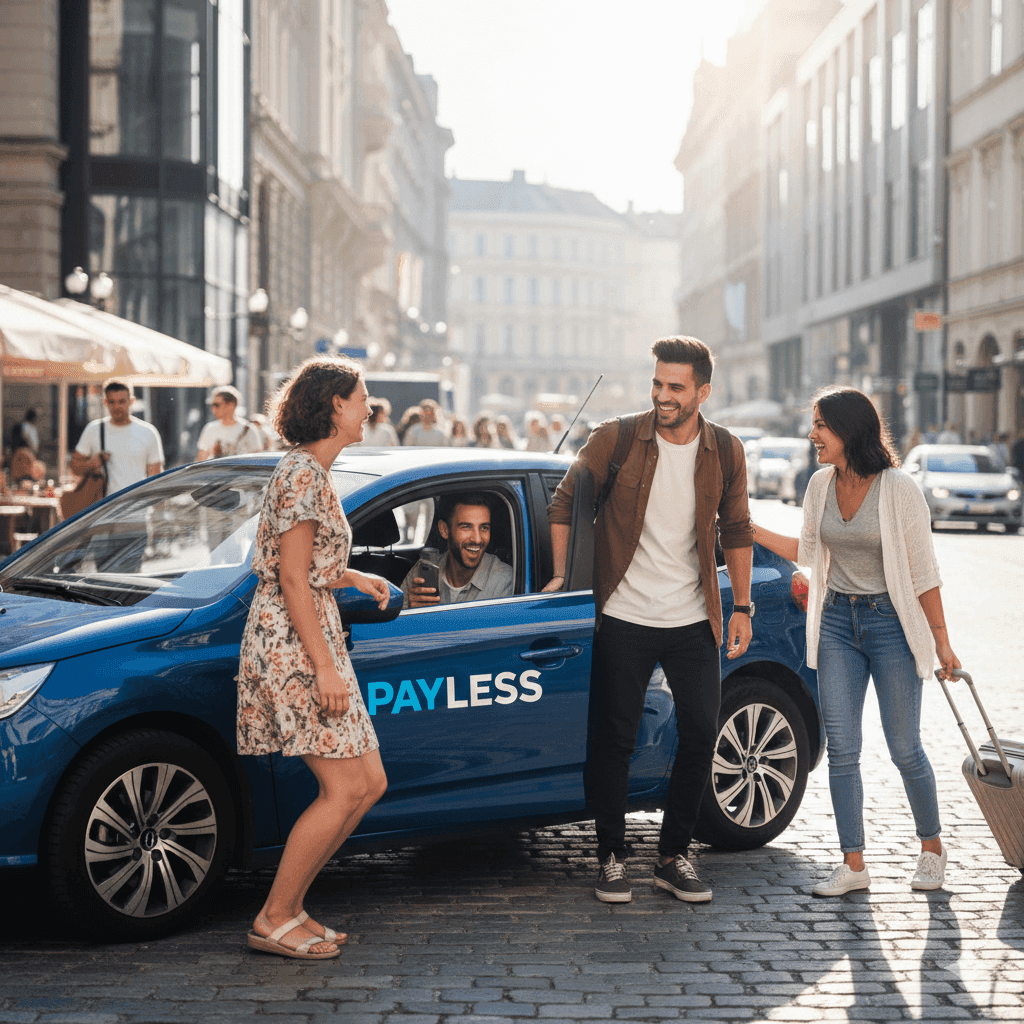
Shared scooters have become a symbol of "fast" urban mobility, but they are not always the best choice. In bad weather, evening transfers, longer routes, traveling in pairs or with luggage, their limits become apparent very quickly. In this article, we will compare scooters and car rental in terms of safety, price, comfort, and trends in the EU and Slovakia - and we will add specific data that can also be used in decision-making or presentation.
What is urban mobility (and why it's not just about cars anymore)
Urban mobility is the way people move around the city: to school, work, sports, entertainment or shopping. Today, it's not just about "having a car", but choosing the right mix of options according to the situation:
- Public transport + walking/cycling as a basis for short and regular routes
- Shared scooters/bikes for the "last mile"
- Taxi/ride-hailing for quick travel without parking
- Short-term car rental when you need comfort, safety, luggage, company or flexibility
A key trend is multimodality: young people often combine multiple forms of transport in one day.
Shared scooter: where it makes sense and where it crashes
When is a scooter “ideal”
A scooter works best when several conditions are met at once:
- short distance (typically 1–3 km)
- good weather and dry surface
- short time pressure (e.g. transfer from public transport)
- no luggage (or only a small backpack)
- no need to go in a pair/group
Typical use: “last-mile” transfers between a stop and a destination, short transfers in the center or along the waterfront.
Safety: data worth knowing
Shared micromobility is practical, but in reality it solves three major risks:
1.Contact with cars and infrastructure
- In the city, you often share space with cars, cyclists and pedestrians.
- The risk increases where safe lanes are missing or the surface is of poor quality.
2. Falls and injuries
- In Slovakia, statistics show tens to hundreds of accidents per year (including serious consequences).
- Abroad (e.g. Germany) thousands of accidents are recorded per year with a growing trend.
3. Night rides, alcohol and “two-wheeling”
- In practice, scooters are often used in the evening (center, events), which increases the risk.
Note on the data: The definition of an accident and the method of recording (police vs. hospital) differ in different countries, so it is important to compare the trend and not just the absolute numbers.
Price: why “cheap” isn’t always cheap
The shared scooter model is usually built on:
- unlocking fee
- price per minute
- possibly packages/passes for regular riders
What this means in practice:
- a short ride (5–10 min) can be reasonably priced
- at 15–25 min the price is often competitive with public transport or a shared car
- for multiple trips per day, packages are worth it – but only if you ride regularly
Important: Prices vary by city, time (demand) and operator.
Renting a car in the city: an alternative when it is more than 2–3 km
When does it make sense to rent a car
Renting a car in the city is especially beneficial in situations where a scooter or public transport hits its limits:
- you are traveling in a pair or in a group (the price is shared, comfort increases)
- you are carrying luggage or shopping (safely in the trunk)
- the weather is bad (rain, wind, ice)
- you need certainty of time (meeting, airport, train, exam)
- the route is outside the center (industrial zones, peripheral areas)
- you want safety in the evening/night (returning from an event)
Comfort and safety as a “real benefit”
A car is a closed space with predictable behavior:
- air conditioning/heating
- lighting, wipers, stability
- in newer cars, also assistance systems (braking, lane keeping)
If you only drive around the city occasionally, renting can be easier than owning a car, dealing with service, tires or resident parking.
Specifically: what PAYLESS offers in practice (examples)
Availability, speed of pick-up and transparent conditions are especially important for city life. With PAYLESS, you will encounter, for example,:
- short-term rentals starting from tens of euros per day (depending on category and term)
- weekend promotions of the 2+1 type (third day free with selected offers)
- clear rules for the driver's age and the possibility of resolving an exception for a fee
- additional services (additional driver, child seat, fees for specific services)
Tip: If you are a "city" driver, choose a compact class - easier parking, lower consumption and often the best price/comfort ratio.
Comparison of solutions: scooter vs. car rental (quick table)
| Criterion | Shared scooter | Car rental (PAYLESS) |
| Typical distance | 1–3 km (last mile) | 3 km to all day as needed |
| Weather | sensitive (rain, wind, ice) | stable (heating/air conditioning) |
| Luggage/shopping | limited | no problem (suitcase) |
| Group | 1 person | 2–5 people (cost sharing) |
| Safety | higher risk of falling/collision | higher passive protection |
| Price | convenient for short trips | convenient for longer routes and in pairs |
| Parking | "park" where permitted | Parking needs to be addressed, but you have control. |
| Availability | according to operator coverage | depending on fleet availability and date |
Trends 2024–2026: What’s changing in urban mobility
1) Shared mobility is growing, but cities are tightening the rules
The number of shared mobility rides (scooters, bikesharing, carsharing) is growing in Europe. In parallel, pressure is growing for:
- clear parking (bans on “loose” scooters)
- speed control in the center
- safety rules (helmets, age, alcohol)
2) EU seeks uniform technical standards for micromobility
Harmonized rules and technical requirements for personal micromobility devices (brakes, stability, speed limits) are being addressed at the European level. For cities, this means a gradual transition from “startup chaos” to a stricter framework.
3) Young people are open to Mobility-as-a-Service (MaaS)
MaaS means that you buy mobility as a service: you combine public transport, shared bikes/scooters, car rental and pay as needed. For young people, it is attractive:
- not to tie up capital in a car
- not to have fixed costs (service, insurance, parking)
- to decide according to the situation (today a scooter, tomorrow a car)
4) Cars in the EU: many cars, little space
There is increasing pressure on space in cities. This is also why parking regulations are increasing and at the same time the demand for flexible solutions (carsharing and short-term rental).
Investment perspective: what is “more expensive” and for whom
Young people often compare “what is cheaper today”, but it is important to see the whole picture.
Individual perspective
Scooter: great for short distances, but with frequent use, costs accumulate and comfort is limited.
Car rental: typically cheaper “per person” when 2–4 people are traveling, or when you have more trips per day (shopping, visits, transfers outside the center).
City perspective
Scooters reduce pressure on car parking, but create demands on regulation and infrastructure.
Flexible mobility (including rental) helps reduce the need for car ownership, but requires parking policies and rules.
Business and service perspective
For rental operators, the trend is clear: people want fast online bookings, transparent conditions and a vehicle immediately available.
Investment perspective: what is “more expensive” and for whom
Young people often compare “what is cheaper today”, but it is important to see the whole picture.
Individual perspective
- Scooter: great for short distances, but with frequent use, costs accumulate and comfort is limited.
- Car rental: typically cheaper “per person” when 2–4 people are traveling, or when you have more trips per day (shopping, visits, transfers outside the center).
City perspective
- Scooters reduce pressure on car parking, but create demands on regulation and infrastructure.
- Flexible mobility (including rental) helps reduce the need for car ownership, but requires parking policies and rules.
Business and service perspective
For rental operators, the trend is clear: people want fast online bookings, transparent conditions and a vehicle immediately available.
How to choose the right one (60-second checklist)
Use simple “yes/no” questions:
- Am I going more than 3 km or do I have multiple stops? → car preferred
- Am I going in a pair/group? → car usually wins
- Do I have luggage/shopping? → car
- Is it raining, cold, icy? → car
- Is it 1–2 km to the center and is it dry? → scooter
- Do I need an exact time (airport, meeting)? → car
Frequently Asked Questions (FAQ)
1) When is a scooter more cost-effective than a car?
Especially for short trips in the city center (1–2 km), when the weather is good, you don’t have luggage and you don’t need to go in a group.
2) When is renting a car the most advantageous?
When you are traveling in a pair/group, have more stops, carry luggage, or are traveling outside the city center. In that case, renting is often more advantageous in terms of time.
3) Is renting a car also suitable for young people?
Yes, if you don’t need a car every day. For occasional trips, shopping, or trips outside the city center, renting makes sense because you don’t pay fixed ownership costs.
4) What are the most common risks when riding a scooter?
Especially falls on uneven surfaces, collisions with cars or pedestrians, and driving at night or under the influence of alcohol.
5) Is it possible to combine public transport and car rental?
Yes. The common model is to take public transport to the city centre and use a car for areas where public transport is not practical (outskirts, shopping, trips).
Summary / TL;DR
- Scooters are the best for the last mile (1–3 km) and good weather.
- In rain, winter, luggage and a group, renting a car wins.
- Micromobility safety is a topic: accidents and regulation are growing in the EU.
- Young people are increasingly operating in the MaaS model - mobility as a service.
- PAYLESS is a practical choice when you want to quickly "switch" between transport options.
Conclusion
A shared scooter is great when you need to get a few blocks quickly. However, if you’re dealing with a longer route, bad weather, evening transfers, multiple stops, or traveling in pairs, renting a car is often safer, more convenient, and more cost-effective per person.
Want to compare options for the coming week or weekend? Check out available PAYLESS vehicles, choose a category, and book online – it pays to have a plan B in the city.
Resources
[1] BECeP – statistics on electric scooter accidents in Slovakia (2022–2023)
[2] European Commission – Urban Mobility Observatory: data on the impact of rental e-scooters (average time and distance of trips)
[3] Eurostat – Passenger mobility statistics (car dominance, occupancy)
[4] ETSC – Improving the Road Safety of E-scooters (PIN Flash)
[5] Destatis – Germany: traffic statistics and categories of accident participants
[6] OECD/ITF – Safe / Safer Micromobility (average trip lengths, risk factors)
[7] European Commission – Shared mobility trips in Europe (Fluctuo index)
[8] Paylesscar.sk – vehicle offer, rental conditions, fees and promotions (2+1, minimum driver age, price list)
