Renting a car when traveling with children: what's changing in 2026
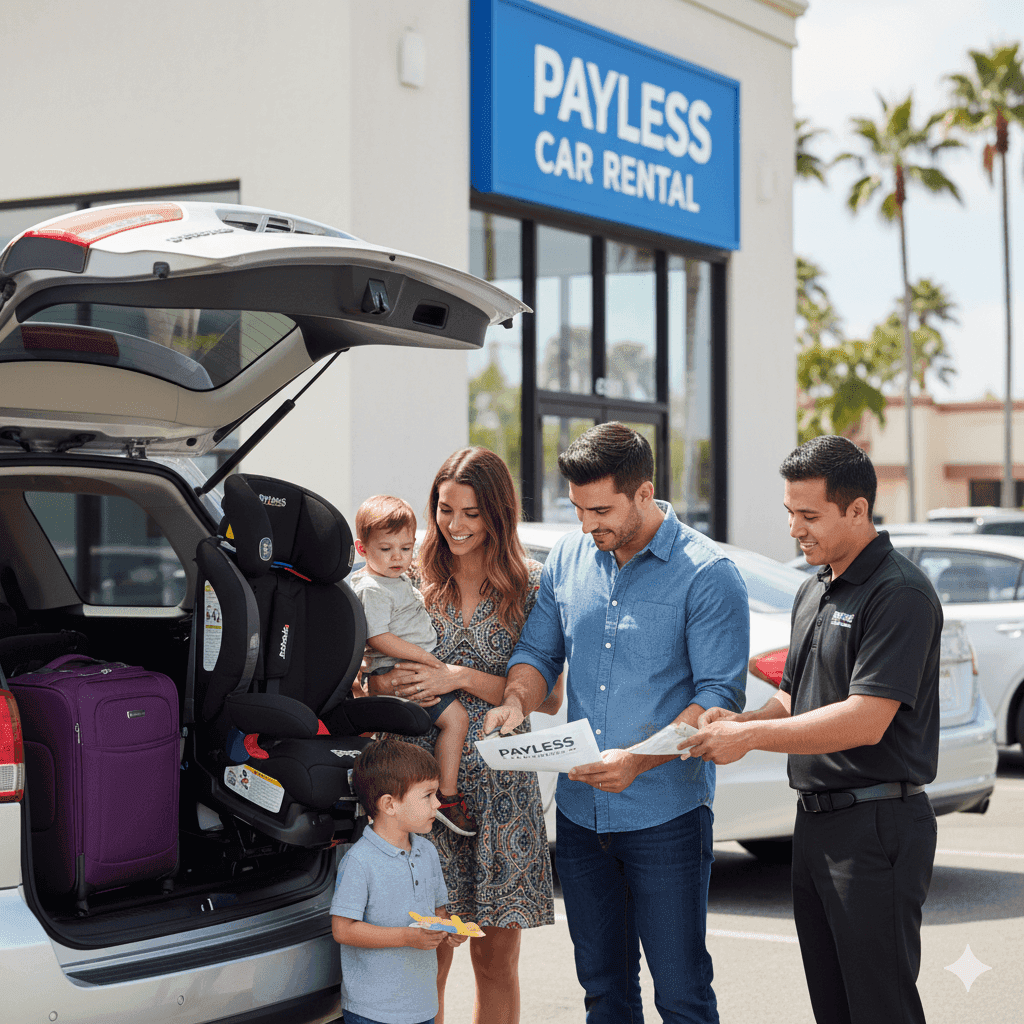
Traveling with children is often more comfortable in a rented car than in your own – if you know what to ask and what to check. The year 2026 brings two big “silent” changes: new safety technologies in vehicles (which will gradually become standard across the EU) and the definitive shift of the child seat market to a newer type of approval (R129 / i-Size). In this article you will find practical advice, a comparison of options, specific numbers and a checklist before departure.
What’s changing the most in 2026 (and why families should address it)
1) New safety systems are becoming standard in fleets
The EU is already implementing mandatory safety technologies under the so-called General Safety Regulation (GSR). The good news for families is that the next phase of requirements is expanding from 2026 – especially for new vehicle types (and subsequently for all newly registered cars).
Example of the impact on family safety:
- Advanced Automatic Emergency Braking (AEB) – the system’s capabilities are gradually expanding so that in addition to cars, it can also respond better to pedestrians and cyclists.
- Lane Keeping / Emergency Lane Keeping – helps with fatigue, microsleep or inattention.
- Intelligent Speed Assist (ISA) – warns (or “pushes back”) when the limit is exceeded.
- Driver drowsiness and inattention warnings, reversing sensors/camera and other features.
For a parent, this means simple things: if you get a “newer” car model in 2026, the chance of better active safety equipment is higher – but it still applies that technology will not replace properly securing your child.
2) Child seats: R129 (i-Size) is already the “new normal” in practice
From 1 September 2024, new seats approved according to the older R44 regulation will no longer be sold in the EU – sales will be tied to R129 (i-Size). In 2026, you will feel this mainly because:
- when buying a new seat, you will almost always come across R129,
- rental companies are gradually changing accessories to have modern seats in circulation,
- compatibility and correct installation (ISOFIX vs. belt) are increasingly being addressed.
For families, there is an important difference:
- R44 worked mainly with weight groups,
- R129 worked primarily with the child's height, adding stricter tests (including side impacts) and encouraging longer rear-facing travel for the smallest.
3) More families are travelling – and the pressure on the availability of accessories is growing
In the EU, the number of holiday/recreational trips remains at very high levels (Eurostat reports hundreds of millions of trips per year). For car rental companies, this means higher demand for:
- multi-seater cars and family estates/SUVs,
- accessories (child seats, booster seats, roof boxes),
- fast check-in (so that the family does not have to wait too long at the branch with the children).
Child seat when renting a car: 3 solutions and their pros/cons
Solution A: Rent a seat directly from the car rental company
For whom: families who travel by plane or do not want to lug a seat.
Advantages:
- comfort - the seat is waiting for you at the branch,
- less luggage,
- simpler logistics for one-way trips.
Disadvantages / risks:
- availability (may be limited during peak times),
- it may not be "exactly the model" you are used to,
- you need to be careful about the right type (age/height of the child, ISOFIX compatibility).
Specific prices (indicative): in the price lists of car rental companies in Slovakia, a child seat is usually charged per day, even with a maximum rental ceiling.
Solution B: Take your own seat
For whom: parents who want maximum certainty of the compatibility and condition of the seat.
Advantages:
- you know its history (no accidents, proper storage),
- the child sits in a "familiar" and often more comfortable environment,
- you can install it quickly and correctly.
Disadvantages:
- logistics (especially with air transport),
- risk of damage during transport,
- time during transfers.
Solution C: Buy a seat/booster at the destination
For whom: families who travel frequently to the same destination (e.g. apartment, family abroad).
Advantages:
- a one-time purchase can be cheaper than recurring fees,
- you can choose exactly according to the child.
Disadvantages:
- time and stress after arrival,
- risk of making an inappropriate choice without advice.
How to quickly determine if a seat is “right” (R129, i-Size, ISOFIX)
Read the label – it’s the quickest way to avoid getting caught
Look for:
- R129 / i-Size marking (newer standard),
- height range (e.g. 40–105 cm, 100–150 cm),
- installation method: ISOFIX (anchors + support leg/top tether) or belt.
Practical tip: height is more important than age these days
Age is only a guide in practice. When choosing a car seat (with exceptions in individual countries), consider the following in particular:
- the child’s height,
- correct belt routing (if the child is sitting on a booster seat/in a higher category),
- the stability of the seat (it must not sway significantly).
Choosing a car for the family in 2026: what makes sense in leasing
City commute vs. highways vs. mountains
- City break (city, short routes): compact car with good rear access, parking sensors and air conditioning.
- Highways and long trips: station wagon/SUV with cruise control, assistance systems, quieter interior.
- Mountains and winter: higher ground clearance, quality winter tires, or 4×4 (don't overestimate - tires and driving style are the main deciding factors).
7 key details that parents often underestimate
- ISOFIX anchors also in the "right" places (not every car has ISOFIX on all rear seats).
- Width of the rear bench (2 seats + adult? often a problem).
- Opening the rear door (comfort when loading a child).
- Trunk size (stroller + luggage = reality).
- Rear windows and blinds (for sleep and sun).
- Rear row air conditioning (a big difference on long trips).
- Safety equipment (AEB, lane keeping, assistance).
Rules (SK/EU) in brief: what is a “must-have” to avoid a fine
Slovakia: basic limit of 150 cm (with exceptions)
In the Slovak environment, the rule is often used that a child with a height of less than 150 cm should be transported using a suitable restraint system (child seat/booster seat according to the parameters). At the same time, there are specific exceptions (e.g. if the vehicle does not have options for all necessary seats, etc.).
The EU is not uniform: somewhere 135 cm, somewhere 150 cm
When traveling across countries, take into account that not all countries have the same limit (some state 135 cm, others 150 cm or a combination of age/height). The practical rule for a family is simple: if you stick to the stricter limit (150 cm) and use the correct restraint, you are “safely” compatible in most countries.
Checklist before departure: 12 points that will save you both nerves and money
- Check when booking that the child seat/booster seat is really an added extra.
- Find out if it is ISOFIX or belt installation (and whether your child "tolerates" it).
- When collecting the car, check the seat label (ideally R129/i-Size).
- Install the seat yourself or ask for assistance - but always check it physically.
- Check that the belt is routed correctly (especially with a booster seat).
- If the child is sitting in the front, the passenger airbag must be correctly adjusted according to the type of seat (often switched off when facing the opposite direction).
- Switch on the child safety locks on the doors and windows.
- Check whether you have the mandatory equipment according to the country (e.g. reflective vests, warning triangle).
- Plan breaks: small children usually need a break more often than adults.
- Keep a “quick pack” in your car: water, tissues, bags, a small snack.
- Inflate your tires to the correct pressure (especially when the car is full).
- Save the assistance service contact and branch number.
Specific data worth noting
- The effect of properly restraining children: research shows that children who are properly restrained in a child restraint system are approximately 60% less likely to die or be injured than children who are not restrained.
- The effect of car seats on the youngest: estimates suggest a reduction in the risk of death of approximately 71% for infants and 54% for children aged 1-4 years when used correctly in passenger cars.
- EU - road safety: approximately 19,940 people died on EU roads in 2024 (provisional figures). Each percentage point of improvement means hundreds of lives.
- Price lists of accessories: in Slovakia, car rental price lists often include daily child seat fees and price caps for the entire rental.
Investment perspective: what the 2026 changes mean for families and car rental companies
For families (practical economics)
- If you travel 1-2 times a year and fly, renting a seat makes logistical sense.
- If you travel more often and especially by car, your own seat is usually cheaper and more comfortable in the long term.
- For longer rentals, it is worth monitoring the price caps for accessories (they often significantly reduce the average price per day).
For car rental companies (offer and capacity)
- After 2024, there is pressure on the market to modernize accessories (R129), which increases the costs of inventory, service and inspection.
- With higher demand from families, the importance of proper logistics is growing: availability of types (egg, toddler, booster), hygiene standards and fast check-in.
- Newer cars with mandatory safety systems increase the attractiveness of fleets, but are more capital-intensive.
Frequently Asked Questions (FAQ)
Is a car seat mandatory in a rental car?
If a child is under the legal limit (in Slovakia it is often stated as 150 cm), they must be transported in an appropriate restraint system. When traveling abroad, check local rules.
Can I still use an older R44 seat in 2026?
Use may still be legal if the seat is in good condition and within its service life. However, new R44 seats are no longer to be sold in the EU; when buying a new one, you will naturally mainly encounter R129.
Which is better: ISOFIX or belt?
ISOFIX reduces the risk of incorrect installation, so it is more practical for most parents. However, a properly secured seat with a belt can also be safe.
Will I get "exactly" the seat I want at the car rental company?
Not always. Rental companies usually guarantee a category (e.g. child seat), not a specific model. Therefore, it is important to state the child's age/height in advance and check the label and installation when collecting.
When is a booster seat enough?
Usually, only when the child is sitting safely, the belt fits correctly over the shoulder and pelvis and meets the minimum parameters according to the seat and local regulations. If you are not sure, choose a full-fledged restraint system.
TL;DR (summary)
- The next phase of mandatory safety technologies in vehicles is moving forward in the EU in 2026 - newer cars in fleets tend to be safer.
- Child seats have in practice moved to the R129/i-Size standard; new R44s are no longer to be sold in the EU.
- The biggest risk is not the "car type", but incorrect installation of the seat - always check the label and the fastening.
- Renting a seat is convenient, your own seat often gives more security; watch out for price caps for longer rentals.
- Use a checklist before leaving - it will save you time, nerves and money.
Conclusion and CTA
2026 is a good year for families in that cars are gradually becoming safer and the car seat market is becoming more understandable (R129/i-Size). At the same time, however, the safety of the child mainly depends on the correct selection and installation of the seat and on whether you take 5 minutes to check the details when collecting the car.
Are you going to travel as a family? Choose a vehicle according to the route, book accessories in advance and save yourself last-minute stress. Book your car rental at PAYLESS online and add a suitable child seat as needed.
Sources and recommended literature (SK + abroad)
- PAYLESS (SK): price lists/fees for accessories (child seats) – paylesscar.sk
- European Commission: Road Safety Statistics 2024 (preliminary data) – transport.ec.europa.eu
- European Road Safety Observatory (ERSO): Protective equipment (seatbelts & CRS) – road-safety.transport.ec.europa.eu
- Road Safety Thematic Report: Seat belt and child restraint systems (ERSO) – road-safety.transport.ec.europa.eu
- RSA Ireland: Child safety in cars (R44 vs R129, sale after 1. 9. 2024) – rsa.ie
- Brussels-Capital Region: Safely transporting a child (R129) – be.brussels
- Federal Ministry of Transport (DE): New vehicle safety systems (GSR, timetable) – bmv.de
- NHTSA (USA): Seat belts and child restraints – nhtsa.gov
- Eurostat: Tourism trips and nights (2024) – ec.europa.eu/eurostat
Note: Child seat regulations may vary in detail from country to country. If you are traveling abroad, check local regulations (especially for exemptions and specific vehicle categories).
