Why it's worth booking a car before a flight
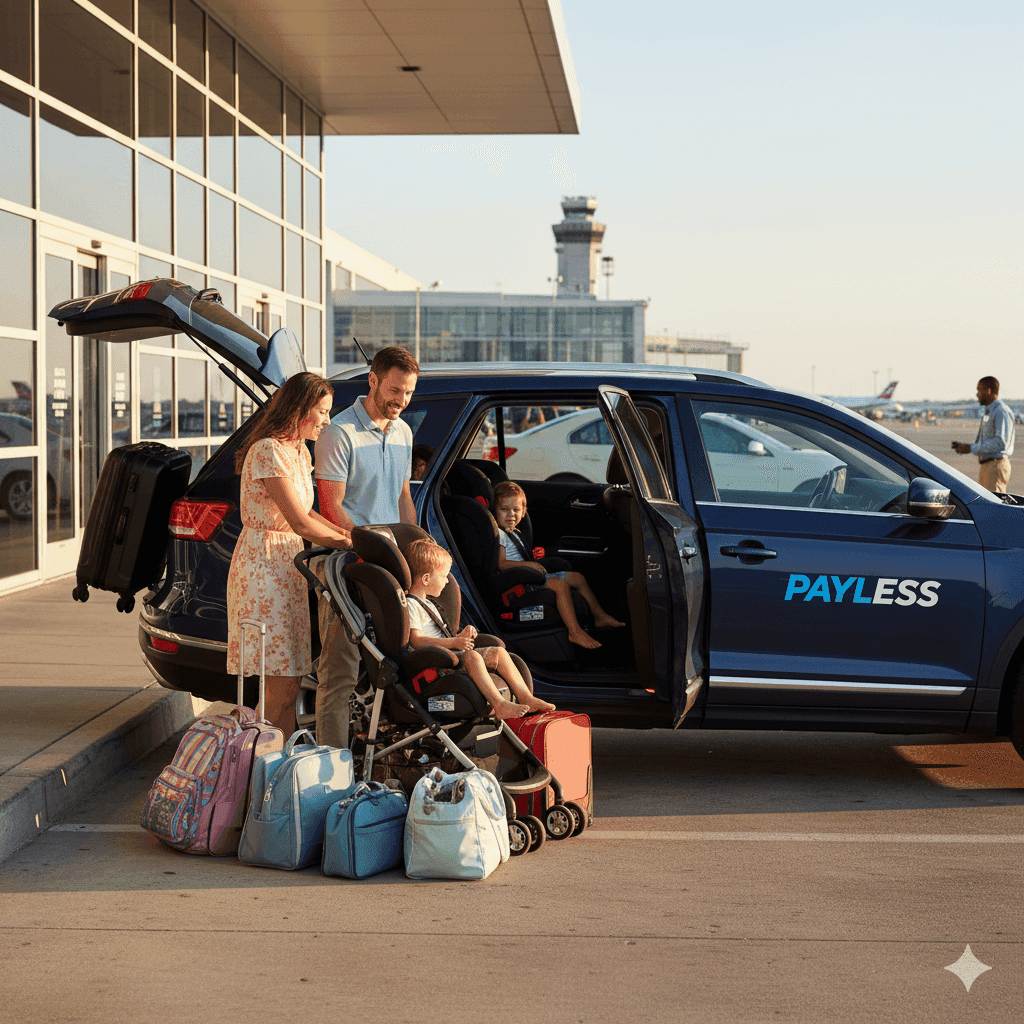
When planning a vacation, most people intuitively jump to the plane ticket first. In practice, however, it often makes more sense to do the opposite: book a car early – ideally with flexible terms – and then finalize your flight connection. It’s not just about “cheaper prices” (which behave differently for cars than for flights), but about controlling availability, risk, and overall budget.
In this article, we’ll explain how rental vs. flight pricing works, what data says about when to book, and add a practical process that experienced travelers use: book → track → rebook.
Why to book a car early: 5 reasons that are decisive in practice
1) A car is a “hard capacity” – it runs out during peak times
While with airline tickets you often have alternatives (different time, different airport, transfer), with cars the capacity is local and limited. If you need a specific category (e.g. 7-seater, 4×4, automatic, LCV/van, child seats), availability may be significantly limited.
- key phrase: availability of vehicles at peak times
- typical situation: holidays, summer holidays, big events, school holidays in the region
2) The car affects the entire itinerary (and often also the choice of flight ticket)
If you know that you have a car for sure, you can choose more advantageous flights:
- arrival at a smaller airport (where you will be "stuck" without a car)
- departure from another airport (one-way itinerary)
- accommodation outside the center (cheaper, but requires mobility)
3) Car rental can often be booked without paying in advance (lower risk)
With flights, it is common to pay immediately and cancellation is limited. With cars, you can often choose the option where you pay only upon collection (depending on the product, tariff and branch). This makes the car a cheap "reservation insurance" - you keep the availability while you are still fine-tuning the flight.
4) Rental and flight prices move differently
A simple rule:
- flights: more often than not, too late = more expensive (although there are exceptions)
- cars: for some destinations and periods, last-minute can be cheaper, but the risk of "sold-out" and poor selection increases
5) An experienced traveler does not only deal with the "lowest price", but also the risk
When traveling, there is a difference between:
- "saving 15 €" and
- "saving your vacation" when you find out that only luxury categories or no cars are left.
How pricing works: car rental vs. airfare (clearly)
Car rental: price is a mix of demand, fleet and rules
Price typically includes:
- branch/fleet occupancy (how many cars are already booked)
- season (peak vs. shoulder season)
- vehicle category (economy vs. SUV vs. van)
- rental length (weekend vs. 7 days vs. monthly rental)
- pickup location (airport vs. city)
- one-way (return elsewhere)
- extras (seats, second driver, insurance, winter equipment)
Flight ticket: dynamic fares and yield management
For flight tickets, the price changes according to:
- fare classes (how many seats remain in the budget class)
- demand at the time (e.g. Friday night vs. Tuesday morning)
- seasons and events
- competitive routes
Important for planning travel: both airfare and rental prices are now largely driven by algorithmic, dynamic pricing. That's why it makes sense to work with a strategy and not with one "magic day."
What the data says: when is it cheaper (and why it’s not the whole story)
Car rentals: “too early” may not be the cheapest
Several analyses show that the simple “the earlier, the cheaper” does not apply to cars. For example:
- one analysis (USA, 7 nights) found that booking 3 months in advance was on average more expensive than booking 7 days in advance – by about 13.4%.
However, this does not mean that you should wait. The same methodology emphasizes:
- risk of being sold out
- worse selection
- and the strategy of “book now (without prepayment) and rebook if the price drops”
Car rentals: “1 month in advance” is often a good compromise
According to data from metasearch, a practical rule of thumb can be:
- aim for about 1 month in advance (or less),
- and beware of extremely early bookings of 6+ months, which in some cases are more expensive.
However, there are exceptions:
- during peak periods (July/August, holidays) and for special categories (minibus, large van, specific equipment), it is worth starting your search 6–12 months in advance, especially if you have free cancellation.
Flight tickets: the “sweet window” is often closer than people think
Big data reports (sales data + flight data) provide indicative windows and rules:
- domestic flights: approximately 1–3 months in advance is recommended; one report states that this can save up to 25% compared to last-minute
- international flights: one report states a “magic window” of approximately 18–29 days in advance
- day of purchase: the same report states that Sunday is usually the best day to book (compared to Friday, the savings can be in the order of units to tens of % depending on the market)
Note: these windows are statistical averages. Different rules may apply for a specific direction (e.g. Vienna–Lisbon in summer).
Specific data (EU/SR) that explain the pressure on availability
These numbers are not a “price list”, but they help to understand why cars sell out faster and prices fluctuate more on certain dates:
- EU – accommodation and demand: in 2024, the EU recorded a record of approximately 3.02 billion overnight stays in accommodation facilities, an increase of approximately +2.7% year-on-year.
- Slovakia – tourism growth in 2025: The Statistical Office of the Slovak Republic reports that in October 2025 alone, approximately 545,000 guests were accommodated in accommodation facilities (+6% year-on-year), and in the first 10 months of 2025, this was a total of approximately 5.4 million guests.
- EU – air passengers: Eurostat reports that in the first quarter of 2025, approximately 208 million passengers were transported by air in the EU (+5.1% year-on-year).
For travel planning: more people are traveling, more people need mobility – and for some destinations, this means that if you need a car “for sure” (and not just “if you manage to”), it pays to deal with it earlier.
A practical strategy that works: “book → track → rebook”
This is the core of the whole trick, why it makes sense to deal with a car before the flight.
Step 1: Book a car as soon as you have a rough plan
- destination (at least the region/area)
- approximate dates (even with a margin of +/- 1 day)
- requirements (automatic, 7-seater, 4×4, child seat, LCV)
Tip: If you don’t know the exact arrival/departure yet, make two reservations (e.g. airport vs. city center) and cancel the weaker one later.
Step 2: Prefer flexibility (if you’re undecided)
- Look for cash on delivery or low-risk terms
- Avoid prepaid rates if your plan is uncertain
Step 3: Set price “checkpoints”
- 6–8 weeks before travel: First comparison
- 4 weeks: Typically a good time to optimize
- 7–10 days: Final check (still stress-free)
Step 4: Rebook when the price drops
- If you have a non-prepaid reservation, you can often just cancel and make a new one
- If you have a prepaid rate, check the cancellation policy (may not be worth it)
8 situations when it is more sensible to book a car than a plane ticket
- you are traveling with children (seats, space, time reserves)
- you need a car (it disappears quickly during peak hours)
- you are a group and want 7–9 seats
- you are planning a road trip (more accommodation, flexibility)
- you want to stay outside the city center (cheaper accommodation, but complicated without a car)
- you have an arrival/departure at an unconventional time (night flights)
- you are going to a destination with limited public transport (islands, smaller cities)
- you are planning a business trip with a fixed program (a car is "critical infrastructure")
Payless Access: How to Book Early and Not Get Locked Out
Beware of Prepaid Bookings and Cancellation Fees
Prepaid bookings usually come with cancellation policies. For example, the fee schedule will list percentage cancellation fees (typically for canceling a prepaid booking) and higher fees for “no shows.”
Practical rule:
- if you are still fine-tuning your flight ticket and dates, prefer the option that gives you flexibility
- prepaid rates make sense when the trip is already final and the price is significantly better
Checklist before confirming your reservation (2 minutes that will save you nerves)
Check:
- cancellation conditions (until when is the change/cancellation free of charge)
- whether a credit card is required and what is the deposit
- fuel policy (full-to-full, etc.)
- rules for the second driver
- if you are going across borders: permission to travel / fees / country restrictions
- insurance coverage (CDW/TP, additional insurance) and your existing coverage (card, travel insurance)
Investment perspective: car reservation as a “hedging” against price shocks
Imagine it as simple risk management:
I reserve today (flexibly):
- I am sure that the car exists
- I have a “ceiling” – I know how much it will cost me at most
I follow the market:
- if the price drops, I will take a better offer
- if the price increases or the cars run out, I still have my reservation
Mini-model (illustrative): what does “postponing” cost you in practice
- when analyzing rentals (7 nights), it turned out that early reservations (3 months in advance) were on average more expensive than 7 days in advance.
- At the same time, it is explicitly warned that waiting is risky, because you can get into a “sold-out” situation or only expensive categories will remain.
This means: winning is not “guessing the cheapest day”, but having a reservation and the possibility of prebooking.
Most common travel planning mistakes (and how to avoid them)
- I book a car only after I buy a ticket, and then find out that only expensive categories are left.
- I take a prepaid rate too early, then change the flight and pay a cancellation fee.
- I ignore the deposit/credit card, there is a problem on site.
- I set the wrong pick-up/drop-off times and I get an extra day.
- I don’t take into account the season and special events in the destination.
Frequently Asked Questions (FAQ)
1) Is it true that a car is always cheaper when I book it early?
No. In some cases, last-minute bookings can be cheaper for cars. However, early booking often wins in terms of availability and selection - especially during peak periods.
2) When is the "ideal time" to book a car?
For prices, a window of around 1 month in advance often works, but for peak periods and special categories, it is worth starting your search 6-12 months in advance (if you have flexible cancellation).
3) What if I don't know the exact flight times yet?
Book a car with a time margin (e.g. +2 hours) or make two reservations (airport vs. city center) and cancel one later.
4) Is it worth paying in advance for a rental?
Pre-paying makes sense if the trip is definite and the price is significantly cheaper. When in doubt, a flexible option is safer.
5) How do I save on airfare if I first decide on a car?
A car gives you a stable "base" for your itinerary. You can then choose your airfare with more freedom (different flight, different airport), without being limited by the availability of the car.
Summary / TL;DR
- Book a car before a flight, as availability of categories is limited during peak periods.
- Rental prices behave differently than flights: sometimes last-minute is cheaper, but the risk of "sold-out" increases.
- The best strategy is to book flexibly and rebook continuously if the price drops.
- For car prices, there is often a window of ~1 month in advance, for peak periods and special cars start 6–12 months in advance.
- When booking in advance, always check the cancellation policy.
Keywords and entities (used in the article)
Main KW: prices, travel planning
Related KW and entities: car reservation, car rental, flight ticket, flight connection, vehicle availability, flexible booking, cash on delivery, cancellation policy, rebooking, dynamic pricing, yield management, metasearch, Payless, ARC (Airlines Reporting Corporation), OAG, Eurostat, Statistical Office of the Slovak Republic
Conclusion
If you want to travel without stress, start with what is most difficult to "get at the last minute" - book a car. Ideally flexibly, so that you have certainty of availability and at the same time the space to monitor prices and rebook a better offer.
👉 Check the current offer and availability at paylesscar.sk (or also within the PAYLESS group of websites by type of rental: short-term, long-term, LCV, leasing).
Sources (to increase credibility)
Payless (SK): Fees/Cancellation page (prepaid reservations, no-shows) – paylesscar.sk
KAYAK: “When is the best time to rent a car…” (internal data, published 9/4/2025)
NerdWallet: Rental analysis (published 25/11/2025; price analysis from 6/2024)
Expedia / ARC / OAG: 2025 Air Hacks (data Jan–Oct 2024; published 1/2025 in newsroom/PR)
Eurostat: “Record number of tourism nights in 2024 in the EU” (published 17/10/2025)
Statistical Office of the Slovak Republic: Tourism in accommodation facilities (e.g. October 2025; published 12/12/2025) 2025)
Eurostat: Air passenger transport (EU, Q1 2025; published 30.9.2025)
OAG: Articles on dynamic pricing and modern sales standards (NDC)
Note: Prices and conditions may vary by country, branch and selected fare. Always check the current conditions on the website and in the booking process before final confirmation of your booking.
